Greetings to the Society,
As we head into November and December, our calendars begin filling with gatherings, meals, and the annual challenge of finding gifts for people who insist they don’t need anything. Astronomers have a useful suggestion: share a look through a telescope. No wrapping required, although a warm jacket certainly helps.
This season offers plenty of reasons to look up, get together, and appreciate the people who make SMCAS possible.
From Our Planetarium to Rubin Observatory
On Friday, November 6, we welcome Dr. Phil Marshall of Stanford/SLAC, presenting “Welcome to the Vera C. Rubin Observatory.” Following September’s look at the LSST camera with Dr. Andrew Rasmussen, this gives us another opportunity to explore a project that has drawn considerable interest within our Society.
Rubin has also been making news. On October 27, the observatory announced its first dwarf planet candidate—a timely reminder that our inventory of the solar system still has room to grow. I look forward to hearing more about the observatory and the discoveries ahead.
Our December 4 speaker will be Dr. Andrea Zorzi of Stanford’s Earth and Planetary Sciences department. Watch our website for the presentation title and further details.
For both meetings, join us at 7:00 p.m. for our social and Society meeting in Room 110 of CSM’s ISC Building 36, followed by the 8:00 p.m. presentation in the Planetarium. Bring a friend and enjoy an evening of conversation and discovery.
A Few Gifts from the Night Sky
The Geminid meteor shower peaks December 13–14, offering one of the year’s most reliable meteor displays. Unlike most meteor showers, the Geminids come from material associated with an asteroid, 3200 Phaethon. For observing, leave the telescope inside: find a dark location, settle into a comfortable chair, bundle up, and give your eyes time to adjust. A thermos may prove just as valuable as any optical equipment. Clouds, of course, retain final approval over the evening’s program.
The Moon also contributes some seasonal illumination. Full supermoons occur on November 24 and December 23 here in California. December’s full phase falls on December 24 in Universal Time, which explains why some calendars give a different date. “Supermoon” is an informal term for a full Moon near its closest approach to Earth; the visual difference is modest, but a bright Moon rising on a winter evening needs very little additional publicity.
Sharing the View
Our public star parties at Crestview Park in San Carlos are scheduled for November 7 and 14, and December 19 and 26. Check the SMCAS website and event notices before heading out. These evenings offer a welcome opportunity to step away from the holiday rush and spend some time looking beyond it.
If you have family or friends visiting, invite them along. Sharing astronomy can be as simple as helping someone find the eyepiece and giving them a moment to take in the view. You don’t need to deliver a lecture. Sometimes the most memorable part is hearing what they notice first.
As Thanksgiving approaches and the year draws to a close, I want to thank everyone who contributes to our Society: our speakers, board members, newsletter contributors, outreach volunteers, telescope operators, and members. Your time, curiosity, and willingness to share make this community possible.
Whatever holidays you celebrate, I wish you good company, a peaceful season, and a few clear nights. May your gatherings be warm, your skies dark, and your telescope accessories easy to find when you need them.
Clear skies and happy holidays,
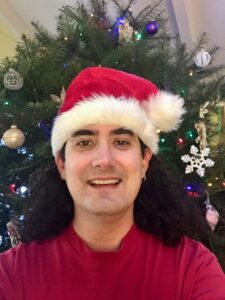
Michael Cooke
President, San Mateo County Astronomical Society