Presentation on December 4, 2026 8:00 pm PST
in the CSM Planetarium
Speaker: Dr. Andrea Zorzi, Stanford, Planetary Modeling Group
The Effect of Impacts on Planet Habitability
Free and open to the public. Free parking in nearby lots.
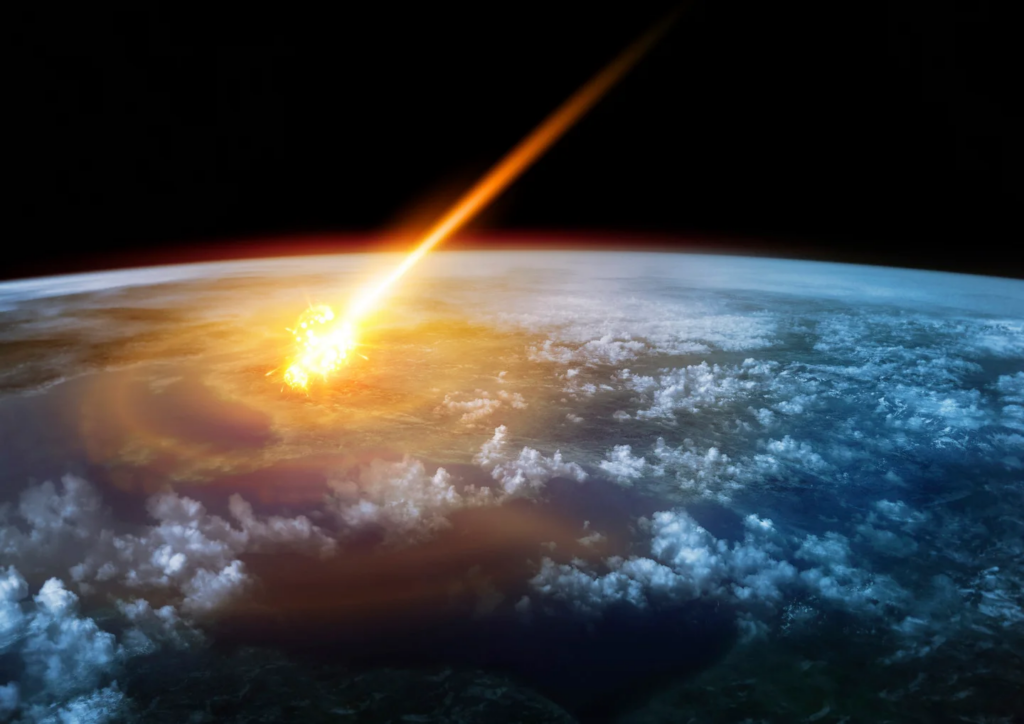
Asteroidal and cometary impacts play a key role in shaping the atmospheric composition of terrestrial planets like Earth. Planetary impacts are a ubiquitous and fundamental mechanism of planet formation and evolution. They deposit energy, erode atmospheres, and deliver chemical species, affecting planetary habitability. In this talk, I will focus on how impacts can favor or disfavor the evolution of life on terrestrial planets. In favor of life, impacts can warm the surface during a period of glaciation and carry chemical components that are at the base of life as we know it, such as water. Against life, impacts can induce global warming or melt the surface of the planet. I will share how to model these effects and what predictions we can make about how big these impacts have to be to trigger climate change and deliver substantial amount of species necessary for life.
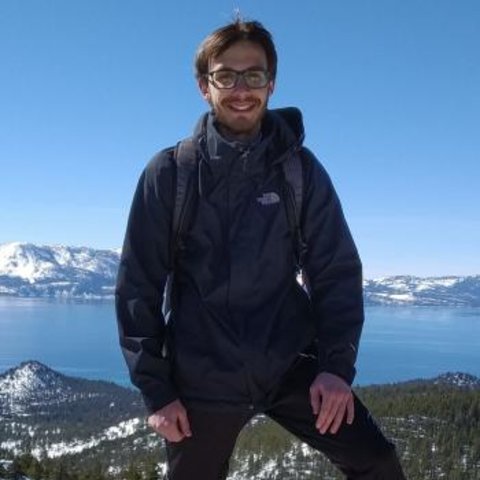
Born in Venice, Italy, Dr Andrea Zorzi earned his BSc in Aerospace Engineering at Università degli Studi di Padova in 2017. For his MSc degree, he moved to the Netherlands and graduated in Aerospace Engineering at TU Delft in 2019, focusing on space flight, planetary sciences and radiative transfer modeling. Afterwards, he spent a year at the Max Planck Institute for Solar System Research in Göttingen (Germany), conducting research on neural network applications for cometary gas expansion studies.
Andrea joined Stanford as a Geological Science graduate student in Fall 2020 and is now part of the Planetary Modeling Group led by Prof. Schaefer. His focus is on planetary impacts, how they affect the climate and chemical evolution of the atmospheres of planets in their early stages.
We propose a mission concept for a space observatory with a large-aperture (50-meter) unsegmented primary mirror suitable for a variety of astronomical applications. The mirror would be created in space via a novel approach based on fluidic shaping in microgravity, which has already been successfully demonstrated in a laboratory neutral buoyancy environment, in parabolic microgravity flights, and aboard the International Space Station (ISS). Theoretically scale-invariant, this technique has produced optical components with superb, sub-nanometer (RMS) surface quality.
The San Mateo County Astronomical Society Star Parties, Speaker Series, and meetings are free and open to the public. Free parking in nearby lighted parking lots, easy access to the Planetarium. Speaker Series and meetings happen in person at the College of San Mateo Planetarium. General meetings and socials start at 7:00 pm in Room 110 in the ISC Building (36). Speaker presentations start at 8:00 pm in the Planetarium. Although generally not a problem in CSM’s state-of-the-art, 77 seat Planetarium, plan to arrive early to assure entry, as seats are first-come, first-served, not reserved. Please note that all guests must be seated and there will be no standing allowed due to safety concerns, access into the Planetarium is stopped once the seats are full.