Greetings to the Society,
A Blood Moon to Start the Season
As we move into March and April, the sky is giving us plenty of reasons to step outside and look up—preferably with a telescope, a few friends, and perhaps a warm drink while the night air still reminds us that winter isn’t quite finished.
March begins with one of the easiest astronomical events to observe: a total lunar eclipse. During a lunar eclipse, the Moon passes through Earth’s shadow and can take on a deep reddish color often called a “Blood Moon.” Unlike solar eclipses, lunar eclipses require no special equipment—just clear skies and the willingness to stay up a little later than usual. They’re perfect reminders that the cosmic clockwork of the solar system is constantly moving above us.
Planetary Pairings and the March Equinox
March also brings a few notable planetary conjunctions, when planets appear close together in the sky. Look for a Venus–Saturn conjunction in early March, followed by a Mercury–Mars pairing in mid-March. These events occur simply because of our line of sight from Earth, but they can create beautiful views through binoculars or small telescopes. Watching planets drift past one another over the course of several nights is a wonderful way to see the solar system in motion.
Later in the month we reach the March equinox, when the Sun crosses the celestial equator and day and night are nearly equal in length. Astronomically, it marks the beginning of spring in the Northern Hemisphere. Practically speaking, it means slightly warmer observing nights—something many astronomers appreciate after a winter spent wondering whether frostbite qualifies as an advanced deep-sky observing technique.
Art, Science, and Stargazing at CSM
On Friday, March 20, we have a wonderful opportunity to combine art, science, and astronomy. We will once again be participating in Mohsen Janatpour’s 37th annual Art & Science presentation at the College of San Mateo Theatre. Mohsen’s presentations are a long-standing tradition that blend creativity and scientific curiosity in a way that always inspires audiences.
After the presentation, members of the San Mateo County Astronomical Society will set up telescopes for stargazing in the Theatre courtyard, weather permitting. It’s always a fun way to end the evening—moving from talking about the universe to actually seeing it through a telescope. If you’ve never attended before, this is a great event to bring friends or family who are curious about astronomy.
Artemis and the Patience of Launch Windows
Looking a little farther ahead, NASA continues preparing for the next major step in human space exploration: the Artemis program. The upcoming Artemis II mission will send astronauts on a journey around the Moon and back to Earth, becoming the first crewed mission to travel beyond low-Earth orbit since Apollo 17 in 1972. Artemis II will not land on the Moon; its purpose is to test the Orion spacecraft, life-support systems, and the massive Space Launch System rocket with astronauts aboard before future missions attempt lunar landings later in the decade.
One interesting aspect of lunar missions is that they can only launch during specific launch windows, when the positions of Earth, the Moon, and the spacecraft’s trajectory all line up properly. These windows can last only a couple of hours, and if the weather or a technical issue interferes, the launch must wait for the next available opportunity. In other words, even with powerful rockets and modern computers, spaceflight still requires a fair amount of patience.
Another Comet to Watch
Just when you think the sky calendar is already full, another visitor is on the way. Astronomers are tracking C/2025 R3 (PanSTARRS), which will make its closest approach to the Sun around April 20, appearing in the constellation Pegasus in the early morning sky.
As with all comets, it’s still too early to know exactly how bright it will become. I like to say comets are a lot like cats — they both have tails and are wildly unpredictable. It may end up being a nice telescopic target, or with a little luck it could brighten enough to become a naked-eye comet. Either way, it will be another good reason to set the alarm a little early and take a look before sunrise.
A Meteor Shower
April brings one of the spring sky’s best-known meteor displays, the Lyrid meteor shower, which peaks around April 21–22. Under dark skies you may see up to about 20 meteors per hour streaking across the sky. The Lyrids are especially interesting because they are one of the oldest recorded meteor showers, with observations dating back more than 2,500 years.
And since April 21st happens to be my birthday, I like to think the universe schedules a meteor shower every year just to celebrate. Sadly, the meteors have not yet agreed to form a perfectly shaped bassoon—but I remain optimistic.
Throughout April, the Moon will also pass near several bright planets including Venus, Jupiter, and Mars, creating attractive Moon–planet conjunctions that are easy to observe and photograph.
Protecting the Night Sky
While the sky continues to provide plenty of wonders, there are also important conversations happening about protecting it. Recently the Astronomical League shared information about a proposal from a company called Reflect Orbital that envisions placing large numbers of mirror satellites in orbit to reflect sunlight onto Earth at night for commercial lighting.
While the concept may sound innovative, many astronomers are concerned about what reflective satellites could mean for astronomical observations and for preserving naturally dark skies. DarkSky International has posted information about the proposal and instructions for submitting public comments to the FCC. Protecting dark skies has always been an important part of amateur astronomy, and developments like this remind us that the night sky is not only something we observe—it’s something worth protecting.
Join Us Under the Stars
All of these events are reminders that astronomy is best enjoyed together. Whether it’s sharing a lunar eclipse, watching meteors streak across the sky, or introducing someone to Saturn for the first time through a telescope, these experiences are what make our club special.
If you haven’t been to a meeting or observing night in a while, consider this your friendly invitation. Join us at an upcoming meeting, come out to an observing session, or stop by the Art & Science event at CSM. Bring a friend, bring your curiosity, and bring your questions—because the universe always seems to have a few new ones waiting for us.
Clear skies,
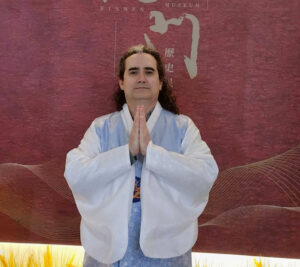
Michael Cooke
President, San Mateo County Astronomical Society