Greetings to the Society,
Summer has arrived, and this year it begins with an especially historic celebration: the 250th birthday of the United States. As fireworks light up the July skies, it is hard not to think about all the generations who have looked upward before us—whether for navigation, inspiration, discovery, or simply the joy of wondering what else is out there.
For astronomers, of course, the real show begins after the fireworks fade. The Sun may keep us waiting a little longer for darkness this time of year, but once night finally settles in, warm evenings under the stars are hard to beat. Whether you are setting up a telescope, experimenting with astrophotography, or simply sitting outside watching satellites drift overhead, I hope you are finding time to enjoy the sky.
Board Elections and Star-B-Q
Although things are a little quieter around the Society this time of year, we do have one important item of business. Voting for the 2026–2027 SMCAS Board of Directors is now underway and will remain open until our annual Star-B-Q on July 18, where members can also cast ballots in person. If you are a dues-paying member, please take a few minutes to vote. Our Society continues to thrive because members are willing to share their ideas, talents, and time.
The Star-B-Q is always one of my favorite SMCAS traditions, and I hope you will join us. It is a relaxed, family-friendly evening where you can come for the food, stay for the conversation, and—if the weather cooperates—enjoy some observing after sunset. This year’s event will once again be a potluck, and the board is looking at having the main course catered. Feel free to bring vegetables, salads, side dishes, desserts, or non-alcoholic beverages to share. If possible, please label dishes for common food allergies, and remember to bring a serving utensil for your dish. Most importantly, please RSVP so we know how much food to prepare. We’d rather have leftovers than discover astronomers are even better at eating than observing.
Looking Up This Summer
There are also a few sky events worth watching in July and August. July brings classic summer observing, with the Milky Way well placed for late-night viewing and plenty of deep-sky favorites in Sagittarius, Scorpius, Cygnus, and Hercules. Earth reaches aphelion—its farthest point from the Sun—on July 6. So yes, we are actually farthest from the Sun during summer. Astronomy has a funny way of reminding us that things aren’t always what they seem.
The big August highlight is the Perseid meteor shower, which peaks on the night of August 12–13. This year should be especially favorable, with little to no Moon interference during the peak. The Perseids are one of the most reliable meteor showers of the year, and they are perfect for casual observing: no telescope required, just a dark sky, a reclining chair, patience, and maybe a snack or two. Actually, definitely snacks.
Just a few nights later, on August 15, Venus reaches its greatest eastern elongation, placing it at its greatest apparent distance from the Sun in our evening sky. This is one of the best opportunities of the year to enjoy our brilliant sister planet after sunset. Even to the unaided eye, Venus will shine brilliantly in the western sky, making it an easy target for newcomers and experienced observers alike.
August 27 a lunar eclipse will peak in San Mateo at 9:12 p.m. During this event, about 96% of the Moon will pass into Earth’s dark shadow. While technically a partial lunar eclipse, the moon should have the “blood moon effect” but with a tiny crescent of the bright milky moon.
A New Gadget to Explore
One exciting surprise this summer came from DwarfLab, who generously sent SMCAS a Dwarf Mini to evaluate. I have been spending time learning its many features, and so far I am genuinely impressed. Rather than replacing my Unistellar eVscope, it complements it beautifully. The eVscope is great, but the Dwarf Mini’s much wider field of view is perfect for large nebulae, and has a mozaic feature. I still have plenty to learn, but after a few more nights under the stars I plan to write a full review for an upcoming issue of Event Horizon. .
Looking Ahead
I hope you come to the Star-B-Q. Until then, enjoy the warm evenings, keep looking up, and may your clouds always know when to take the night off.
Clear skies and happy viewing!
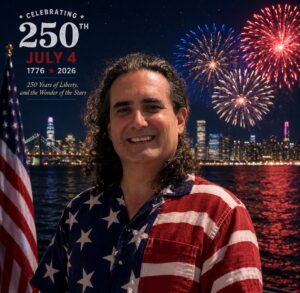
Michael Cooke
President, San Mateo County Astronomical Society