Presentation on September 4, 2026 8:00 pm PST
in the CSM Planetarium
Speaker: Dr. Andrew Rasmussen,
SLAC/Stanford, Staff Scientist, Fundamental Physics Directorate
First Look with the Vera C. Rubin Observatory – with the World’s Largest Camera – for the Legacy Survey of Space and Time
Free and open to the public. Free parking in nearby lots. Details at bottom of page.
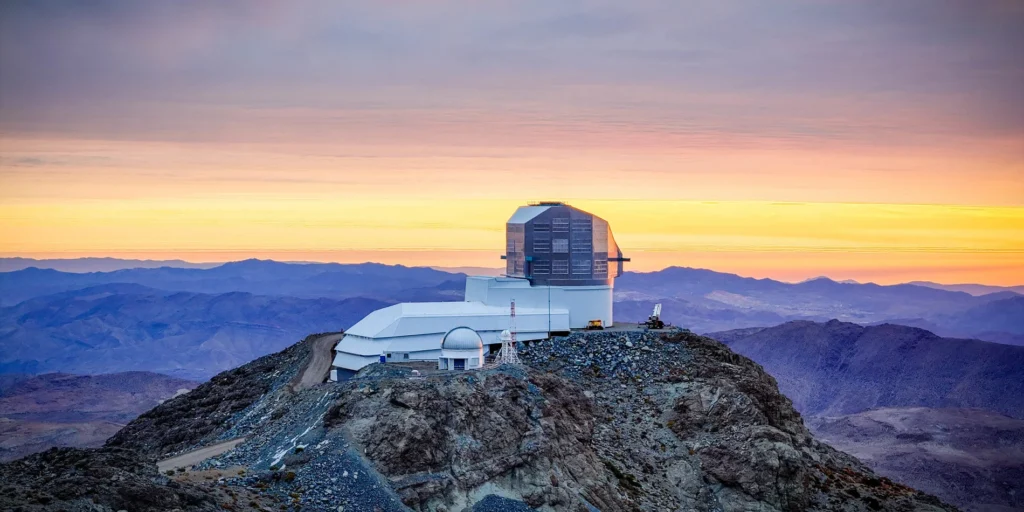
The NSF-DOE funded Vera C. Rubin Observatory’s Legacy Survey of Space and Time (LSST) is a 10-year survey of the southern sky at the Vera C. Rubin Observatory, located on the El Peñon peak of Cerro Pachón in northern Chile. LSST officially began on June 30, 2026, marking the start of a decade of survey data that will enable researchers around the world to better evaluate a wide range of pressing questions about the attributes of dark energy and dark matter, the formation of the Milky Way, the properties of small bodies in the solar system, the trajectories of potentially hazardous asteroids and the possible existence of undiscovered explosive phenomena.
The telescope at the Rubin Observatory is the Simonyi Survey Telescope (SST), and the heart of the SST is the LSST Camera. It uses three refractive lenses to illuminate a 9.6-square degree field of view, and is the largest digital camera ever constructed. In full survey operations, the camera takes a pair of 15-second exposures of each field, scanning the sky throughout the entire night.
In this presentation, Dr Andrew Rasmussen, who since 2021 has had a leading role in the camera as the chief scientist for the LSST camera’s Integration and Test (I&T) team, will focus our attention on the LSST camera’s design and challenges overcome in its commissioning, as well as a variety of the cutting edge science initiatives that the LSST camera is enabling, images, and challenges such as managing the volume of data being collected.
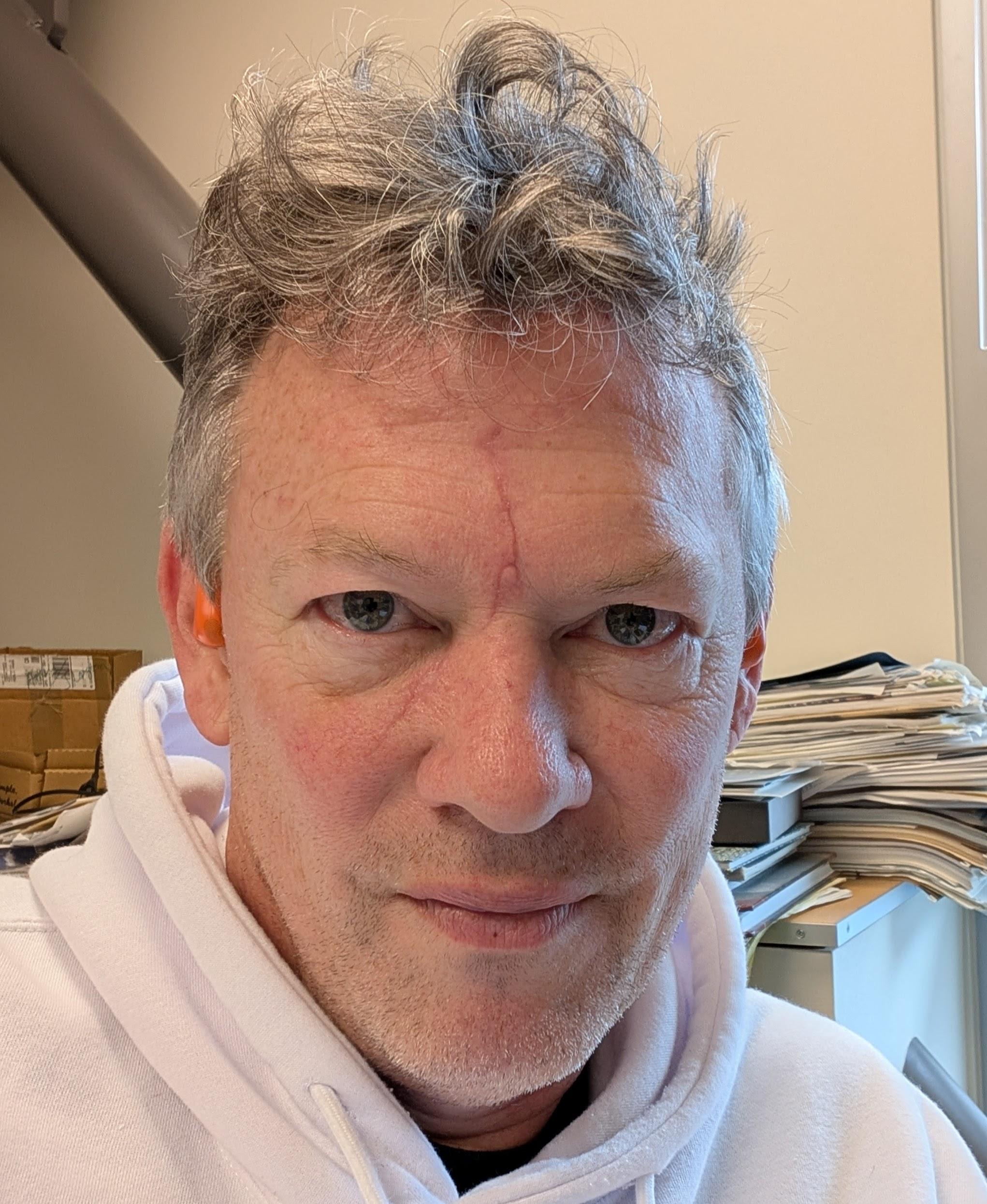
Dr. Andrew Rasmussen is a staff scientist, Fundamental Physics Directorate, at the SLAC National Accelerator Laboratory/Stanford. His primary project is with the Vera C Rubin’s Legacy Survey of Space and Time (LSST) SST Camera. He received a B.A. Physics from Earlham College, and his PhD in Physics from Columbia University. This was followed by Postdoctoral Scientist roles at the University of California and MIT, and then as a Research Scientist at Columbia University before starting as a Staff Scientist at SLAC. In addition to his current work on the LSST camera integration and testing, his prior work includes work at Columbia University’s Astrophysics Lab where he worked to design, build and deploy the X-ray grating array modules for the Reflection Grating Spectrometer aboard the European Space Agency’s XMM/Newton Observatory. At MIT he developed characterization methods for using CCDs as broad-band imaging spectrometers used aboard NASA’s Chandra X-Ray Observatory and ISAS’s ASCA. For his PhD thesis he cut his teeth on a sounding rocket-borne, far-ultraviolet long-slit spectrometer to unambiguously identify and measure highly ionized interstellar medium pervading the Milky Way.
Venue Details
The San Mateo County Astronomical Society Star Parties, Speaker Series, and meetings are free and open to the public. Free parking in nearby lighted parking lots, easy access to the Planetarium. Speaker Series and meetings happen in person at the College of San Mateo Planetarium. General meetings and socials start at 7:00 pm in Room 110 in the ISC Building (36). Speaker presentations start at 8:00 pm in the Planetarium. Although generally not a problem in CSM’s state-of-the-art, 77 seat Planetarium, plan to arrive early to assure entry, as seats are first-come, first-served, not reserved. Please note that all guests must be seated and there will be no standing allowed due to safety concerns, access into the Planetarium is stopped once the seats are full.