Presentation on October 2, 2026 8:00 pm PST
in the CSM Planetarium
Speaker: Dr. Jeff Cuzzi, NASA Ames Research Center
Cassini-Huygens Mission to Saturn, its Moons and Rings
Free and open to the public. Free parking in nearby lots.
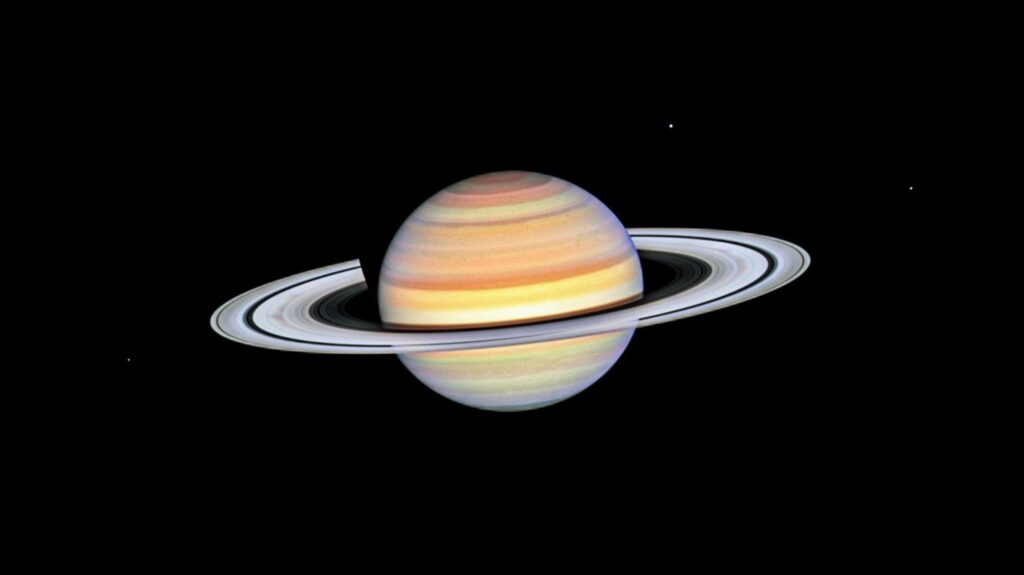
One of the most accessible, fascinating, and brighter planets in the night sky for amateur astronomers to view is Saturn. And Saturn was the destination of one of NASA’s most memorable space voyages: the Cassini mission. Cassini was one of the most ambitious efforts ever mounted in planetary exploration. Cassini was launched on Oct. 15, 1997, the mission entered orbit around Saturn on June 30, 2004 , carrying the European Huygens probe. After its four-year prime mission, Cassini’s tour was extended twice. After two decades in space, NASA’s Cassini spacecraft ended its remarkable journey of exploration with a grand finale on September 15, 2017, and it plunged directly into the planet. Its key discoveries included the global ocean with indications of hydrothermal activity within Enceladus, and liquid methane seas on Titan. Although the spacecraft may be gone, its enormous collection of data about Saturn – the giant planet itself, its magnetosphere, rings and moons – will continue to yield new discoveries for decades.
Dr. Jeff Cuzzi, who was an Interdisciplinary Scientist for Planetary Rings on the NASA-ESA Cassini-Huygens mission, will describe the highlights of the Cassini mission, emphasizing the rings of Saturn, which are increasingly believed to be much younger than the planet itself – maybe dating only to the age of fish on Earth (100-200Myr ago). He will discuss what we know about the complex ring structure, their composition, age, and origin, and their associated small mini-ring moons. His talk will also cover other Saturn system highlights such as its Mars-sized moon Titan, whose atmosphere is denser than ours, and its retinue of icy moons including at least one that harbors a subsurface ocean.
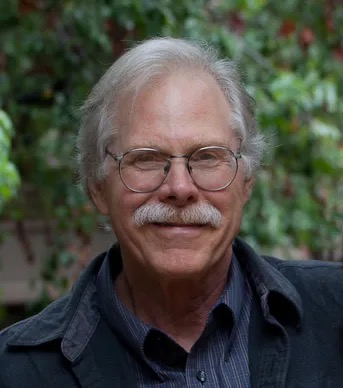
Dr. Jeffrey Cuzzi was a research scientist at NASA Ames and the former lead of the rings subgroup of the Voyager Imaging Team. Cuzzi retired from federal service in 2023 but continues to work with the Planetesimal Formation group as an Ames Associate. He was selected in 1990 as Interdisciplinary Scientist for Planetary Rings on the NASA-ESA Cassini-Huygens mission. For his research in planetary rings, he received the Lawrence Sperry Award of the AIAA, and has been awarded NASA’s Medal for Exceptional Scientific Achievement twice. In 2010, he was was also bestowed the Gerard P. Kuiper Prize, the most prestigious individual award in planetary sciences.
We propose a mission concept for a space observatory with a large-aperture (50-meter) unsegmented primary mirror suitable for a variety of astronomical applications. The mirror would be created in space via a novel approach based on fluidic shaping in microgravity, which has already been successfully demonstrated in a laboratory neutral buoyancy environment, in parabolic microgravity flights, and aboard the International Space Station (ISS). Theoretically scale-invariant, this technique has produced optical components with superb, sub-nanometer (RMS) surface quality.
The San Mateo County Astronomical Society Star Parties, Speaker Series, and meetings are free and open to the public. Free parking in nearby lighted parking lots, easy access to the Planetarium. Speaker Series and meetings happen in person at the College of San Mateo Planetarium. General meetings and socials start at 7:00 pm in Room 110 in the ISC Building (36). Speaker presentations start at 8:00 pm in the Planetarium. Although generally not a problem in CSM’s state-of-the-art, 94 seat Planetarium, plan to arrive early to assure entry, as seats are first-come, first-served, not reserved. Please note that all guests must be seated and there will be no standing allowed due to safety concerns, access into the Planetarium is stopped once the seats are full.