Greetings to the Society,
As spring gives way to summer, the rhythm of observing begins to shift. The nights get shorter, the evenings stay brighter longer, and many of the best celestial sights start happening either very late—or very early. (Astronomy, as always, rewards flexibility … or a strong relationship with coffee.)
Remembering Darryl Stanford
We were saddened to learn of the passing of Darryl Stanford on March 11, 2026. Darryl was not only an astronomy educator at College of San Mateo, but also a member of our Society. He gave talks, supported our meetings at CSM, and helped bring astronomy to both our members and the broader community.
Many of us had the pleasure of working with him over the years, and his presence, generosity, and enthusiasm for sharing the night sky will be deeply missed.
Board Elections: A Call for Nominations
As we move toward June, we begin our annual process of selecting the next Board of Directors. Nominations are now open, and we will be voting in June.
If you’ve ever considered becoming more active in the club, this is a great opportunity. Serving on the board is one of the most direct ways to help shape the direction of SMCAS—whether through organizing events, supporting outreach, or contributing new ideas.
If you’re interested in nominating yourself or someone else, simply send an email to Marion Weiler or to smcas60 (at) gmail.com with the nomination.
If you’re concerned about the time commitment, don’t be. It’s typically just one meeting per month, and every bit of help makes a difference. We welcomed new faces in recent years and would love to continue that momentum.
Meteor Showers Before Sunrise
May begins with the Eta Aquariids meteor shower, peaking around May 5–6. These meteors are debris from Halley’s Comet and are known for being fast and often leaving long, glowing trails across the sky. The best viewing is in the predawn hours, when the radiant in Aquarius rises higher.
While predicted rates are around 20–40 meteors per hour under dark skies, the real challenge is convincing yourself to wake up early enough to see them. But for those who do, it’s one of the more elegant meteor showers of the year.
Evening Planets and Morning Returns
May and June offer some nice planetary viewing opportunities. Venus continues to dominate as a bright beacon in the evening sky, often visible even before darkness fully sets in. Mars is still around, though gradually fading as it moves farther from Earth.
Later in June, Jupiter begins to reappear in the morning sky, signaling its return to prominence in the months ahead. These brighter planets make excellent targets for casual observing and outreach, especially as deep-sky observing becomes more challenging with shorter nights.
Saturn Takes the Stage
June brings one of the highlights of the observing season as Saturn reaches opposition. This is when the planet is opposite the Sun in our sky, rising at sunset and remaining visible all night long.
At opposition, Saturn is at its brightest and closest for the year, making it an ideal target for telescopes of all sizes. The rings are beautifully visible, and even modest instruments can reveal structure that never fails to impress first-time observers. If you’re planning an outreach night this summer, Saturn is always a reliable crowd favorite.
The Strawberry Moon and the Solstice
June’s full moon, traditionally known as the Strawberry Moon, rises low in the sky and often takes on warm golden or orange tones near the horizon. Despite the name, it doesn’t actually turn pink—but it does make for some striking views.
Shortly after, on June 21, we reach the summer solstice, the longest day of the year in the Northern Hemisphere. While this marks the official start of summer, it also brings the shortest nights—something astronomers tend to notice immediately.
The Changing Night Sky
At the same time, the night sky itself is changing in new ways. The continued growth of satellite constellations—and proposals for even more ambitious systems—has raised ongoing concerns within the astronomy community about preserving dark skies and minimizing interference with observations.
It’s a reminder that while we look outward to explore space, we also have a role in protecting how we experience it from Earth.
Join Us Under the Summer Sky
Even with shorter nights, this is a great time of year to stay involved with the club. Whether it’s catching a glimpse of Saturn’s rings, spotting a meteor before sunrise, or simply sharing the sky with others, these are the moments that make astronomy rewarding.
If you haven’t been to a meeting or observing night in a while, consider this your invitation. Come out, bring a friend, and spend some time under the stars with us. The sky may be a little brighter this time of year—but there’s still plenty to see.
Clear skies,
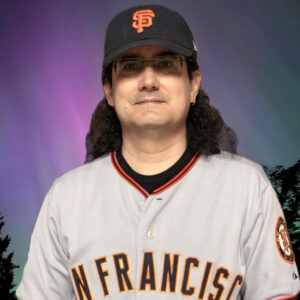
Michael Cooke
President, San Mateo County Astronomical Society