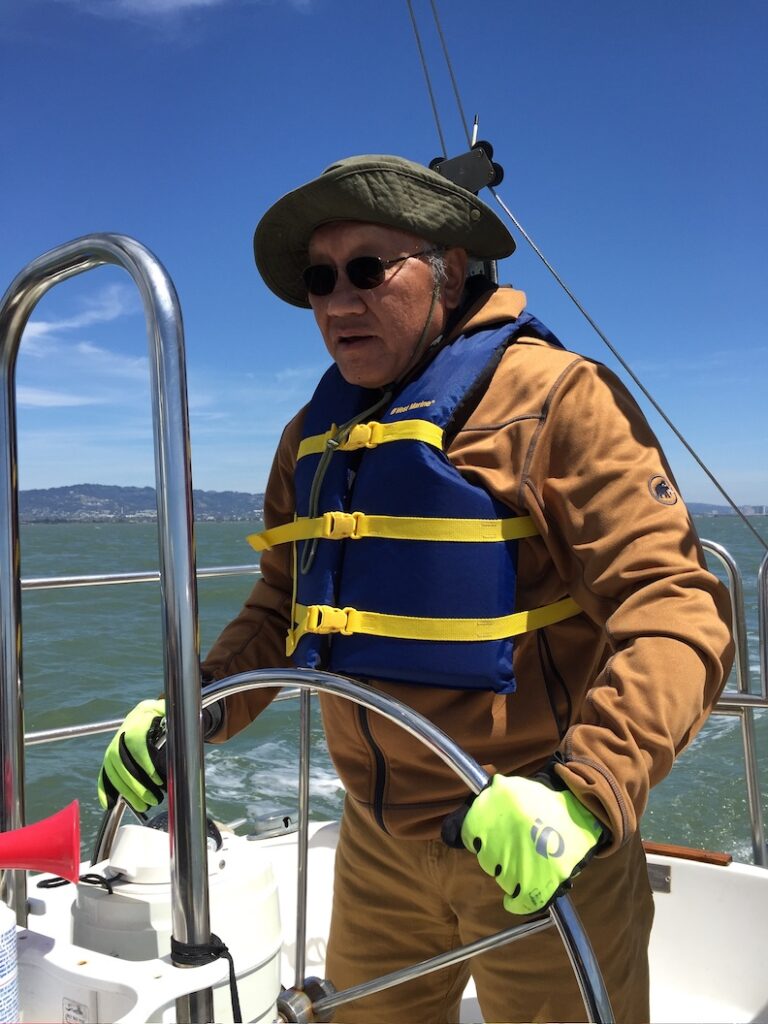
Vikas Kapur and others have gone sailing with Ken before. Here’s a link to one of their adventures.
And here’s some pics from another outing.


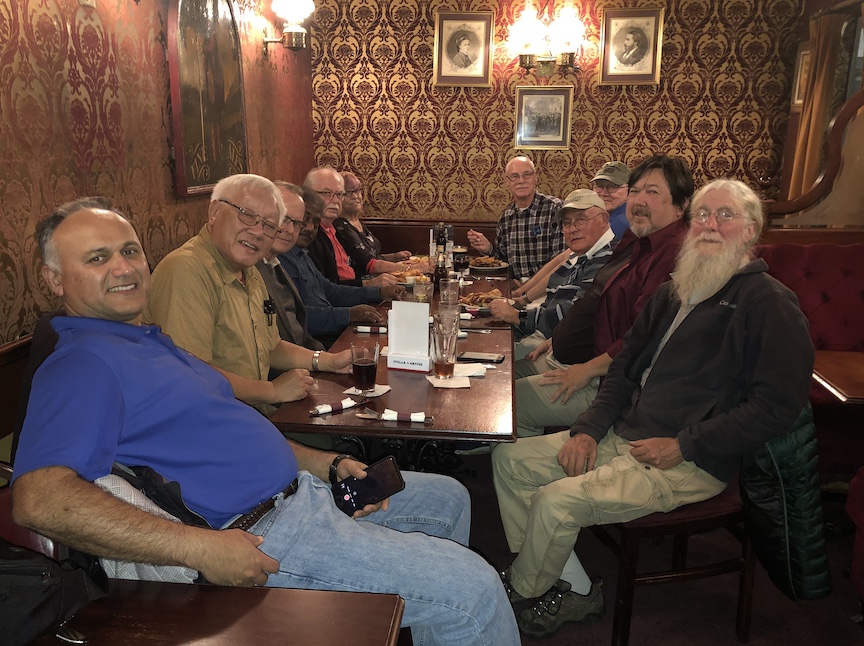
Vikas Kapur and others have gone sailing with Ken before. Here’s a link to one of their adventures.
And here’s some pics from another outing.
This is just a sample of Marion’s photo album. To see it in its entirety, please go to https://www.icloud.com/sharedalbum/#B2OGqQrCLGiiC5a.

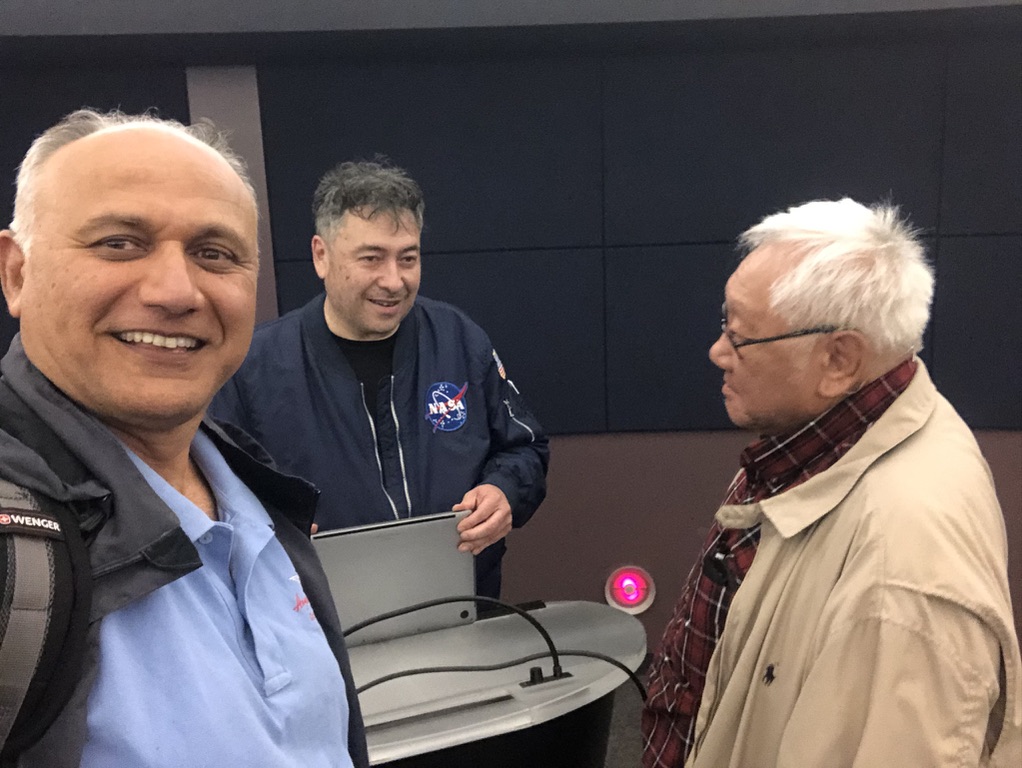
Pascal Lee (NASA/SETI/Mars Institute), who presented to SMCAS at our May and March meetings, and many other times in the past 10 years, sends his condolences to Ken’s family and the SMCAS community.
Marion
Begin forwarded message:
From: Pascal Lee <pascal.lee@marsinstitute.net>
Subject: Re: Sad News – Ken Lum memorial
Date: May 20, 2025 at 11:51:59 PM PDT
To: Marion Weiler <mgwe@pacbell.net>
Dear Marion,
This is such sad news.
Ken seemed so well just a few weeks ago.
Ken was always so enthusiastic about astronomy and space exploration. Each time we met, I appreciated his vision and sense of wonder. He was always so kind to me.
Please convey my condolences to his family and to all his friends at SMCAS.
Pascal.
On Tue, May 20, 2025 at 2:50 PM Marion Weiler <mgwe@pacbell.net> wrote: Pascal,
As you know, Ken Lum, I am sad to report that he passed away unexpectedly on Monday, May 12, likely heart attack. Ken was a long time member of SMCAS, very active in our outreach as well as in astronomy activities in the Bay Area and beyond.
By Chanan Greenberg
Building upon Mike’s earlier post about Ken, I had the honor and pleasure of knowing Ken for 22 years. From our first interactions, I was in awe of his extensive knowledge and the caliber of his astronomy equipment — far beyond my reach at the time. I quickly discovered that Ken was incredibly generous, supportive, and kind.
He was the one who encouraged my early pursuits in astrophotography. Ken invited me to join him and our friend Bob Black (RIP) at the Fremont Peak Observatory Association, as well as on joint trips to Glacier Point in Yosemite for multiple nights of astronomical observations. Always willing to share his knowledge and, amazingly, his high- quality equipment.
For a total of five years, Ken loaned me his AP-900 mount (which I later purchased from him), as well as his AP–1200 mount and C–14 scope, which were eventually acquired by Frank Seminaro. He and his wife, Loh-Chung, were central figures at the Hidden Villa Star-B–Ques and other club picnics.
My most cherished piece in my entire astronomy collection is the AP 5-inch refractor scope that Ken sold me some years back. It wasn’t just a transaction; he wanted it to go to someone who would truly use it. As I produced images with it, I would always share them with him, and he consistently provided supportive feedback and constructive advice.
Above all, I fondly remember the many nights at Crestview Park, sharing our excitement over what we could observe. Years before the advent of eVscopes, we inserted his photoelectric eyepiece into my 12-inch Dobsonian, producing CCD–quality views of the Orion Nebula that astonished everyone — including ourselves.
I met Ken when he was about the age I am now, and it’s both strange and saddening to think that he’s no longer with us. Over the past week, each time I step out at night and look at the stars, Ken immediately comes to mind. He will be dearly missed.
I’m currently in contact with Ken’s wife, Loh-Chung, to assist her in handling his astronomy equipment and will provide a separate post about that.
Godspeed, Ken, and Clear Skies,
Chanan

I’m Mike Ryan, a member of the San Mateo County Astronomical Society since 1963 (the only one remaining from the ’60’s). I just returned from a week visiting my 83-year-old invalid sister and her family and was shocked and saddened to learn this morning that our blessed friend Ken Lum had passed away on May 12th, the day after I’d left for Phoenix.
I feel great sorrow at Ken’s passing. For me, it’s one more in a string of tragic losses, following the death a month ago of a woman I’d known (along with her husband) since 1970 at my home religious institution, and the news I just received that my favorite cousin, a woman in London, (and just Ken’s age) has terminal cancer for which she has halted treatment.
It strikes particularly close to home for me, because I’m midway through 75, and less than a year younger than Ken was.
It’s a time of great flux for my wife, Lily, as well. Two years ago, she lost her mother and brother-in-law, along with three lifelong friends, all in Mexico.
Ken was a thoroughly-devoted family man, partnering with his wife, Loh- Chung, an outstanding accountant, to keep their residence in San Carlos, bought new, in tip-top shape. He provided a home for his daughter when she went East to school.
Ken also took loving care of his dear mother (in her 90’s, I think) who lived in San Francisco’s Chinatown until her last days, just about three years ago. He used to apologetically excuse himself from Society board meetings in order to go ‘spell off’ her in-home caregiver but would always stay in close touch with us within a day.
If memory serves, Ken joined the Society in the early 1970’s; I think he may have been our last member from that era. He was a longtime ER physician for Kaiser, as well as a student of history and a friend to all.
Ken was a talented telescope maker, modifier and maintainer, having, for years, a superb workshop with upscale machining and optical equipment in his garage. He loved quality and was the proud possessor of superb apochromatic refractors (one of which member Chanan Greenberg bought and turned into a superb astro-camera), and Astrophysics mounts, of such high quality and exclusivity that they had years-long waiting lists and appreciating in value like fine jewelry or historic automobiles. Ken also skilled at mounting two telescopes on a shared mount, so that he could both observe and photograph in the same session.
Ken was generous and thoughtful, authoring cards and sharing photos. I remember one October Fleet Week Lily and I met with Ken and Loh-Chung in San Francisco, at Sam and Maria Sweiss’s ‘Scope City’ store on Bay Street. Sam (now in Las Vegas) gave us parking passes at their garage, from which we walked to watch the Blue Angels perform over the Marina Green.
As a devoted long-term member of the Antique Telescope Society, Ken loved traveling across the globe to visit landmarks and locations of historic astronomical significance. He also attended numerous solar eclipses in widely separated locations. I’ve been to a dozen of them myself, but Ken went further afield, to India, Mongolia and Siberia, among others. He knew so much, and was so interesting in his presentation, that he was the slam-dunk go-to speaker at pretty much any Society member gathering.
And he was always generous with his time and effort, no matter the reason. Ken was a tireless participant in numerous presentations and exhibitions to the public. He was an anchor at most Crestview Park star parties in San Carlos, and a leader of outreach to the attending public.
In fact, year-in and year-out, Ken was the Society’s coordinator with the San Carlos Parks and Recreation Department, which not only allowed SMCAS to use the Park after hours almost since year 2000, but which agreed not to install lights on the Greg Nannarone Soccer Field, which would have made stargazing at Crestview all but impossible.
Ken also was, for years, the organizer and facilitator of our shared presentations at the Hidden Villa Park public lecture and stargazing site in Los Altos Hills. And whether at Crestview, or Hidden Villa, or anywhere else, Ken was always johnny-on-the-spot for generously preparing hot dogs and hamburgers, supplying condiments and useful implements for all comers.
Not only that, but Ken, for the last few years, authored an email newsletter containing a PDF list of astronomy-related events throughout the Bay Area and Northern California. His very last issue, heralding the current two weeks of activities, arrived in my inbox on May 11th, the day before his death.
I would say that this magnificent man “died with his boots on”. And, he has certainly left behind some enormous shoes to fill.
God bless Ken, his wife Loh-Chung, and those others dear to him.
Thanks for your attention. Feel free to contact me if I can provide any more useful information.
Mike Ryan
jmrastro@yahoo.com
(650) 678-2762
Greetings to the Society,
It is with a heavy heart that I share the news of two major transitions in our community.
In May, we lost longtime club and board member Ken Lum. Ken’s kindness, friendship, and ever-present smile left a lasting impact on our group. His warmth, dedication, and laughter will be deeply missed at every meeting and Star Party.
We also said farewell to Frank Seminaro, a former presenter, lecturer, and enthusiastic astrophotographer, who recently moved away. Frank’s patient guidance helped many of us get started with astrophotography. His wisdom and generosity of spirit will not be forgotten. With a little luck, perhaps we can persuade him to host a future Star Party at his new farm near Tahoe!
These changes leave us with more vacancies on the SMCAS board than expected. Nominations closed July 2. Voting will begin soon and will remain open until our annual Star-B-Que on July 19, where in-person ballots can also be cast.
Star-B-Que is a family-friendly event—bring the kids, and feel free to arrive and leave at your convenience. It’s a potluck BBQ, the board will provide main dishes, bring your favorite side or drink. This is one of our most beloved gatherings, blending good food, good company, and good skies. Please see the invitation sent to the SMCASnews group for more details. I hope to see many of you there!
Some of you may remember our past field trip to SLAC, where we got a firsthand look at components for the then-under-construction LSST—now known as the Vera C. Rubin Observatory. Excitingly, its 3,200-megapixel camera has begun capturing images, and the first public glimpses are already stunning. This marks a new era in deep-sky survey astronomy, and we can expect even more breathtaking views as it comes online.
The ALMA array recently revealed that Comet C/2014 UN271, a visitor from the distant Oort Cloud, is a truly massive object—spanning nearly 85 miles across, making it over ten times larger than most known comets. Active jets of carbon monoxide gas have been observed as it nears the Sun, offering rare insight into the primitive materials that shaped our solar system.
Using a coronagraph, the James Webb Space Telescope has directly imaged TWA 7 b, a planet roughly the mass of Saturn orbiting a young star surrounded by a debris disk. This marks the lightest exoplanet ever imaged directly, a significant milestone in our growing ability to detect and study other worlds.
🌌 July 6 – Saturn and Neptune’s Close Encounter
Set your alarms and grab your cameras! Just before dawn on July 6, Saturn and Neptune will appear incredibly close in the sky—less than 1° apart. It’s a beautiful and rare alignment, perfect for wide-field astrophotography or simply enjoying with binoculars. Moments like this don’t come often, so early birds, don’t sleep on it!
⏱ July 9, July 22 & August 5 – Earth’s Quick Spin Days
Here’s a fun twist—our planet will be spinning just a little faster on these dates, making them some of the shortest days of the year. It’s all due to subtle wobbles and shifts deep within Earth’s core. You won’t feel it, but it’s a cool reminder that even our seemingly steady home planet is in constant motion.
We’ve finally been enjoying clear skies again, and our recent Crestview Park Star Parties have been some of the best-attended in a long time. If you joined us for one, we’d love to hear from you!
Tell us what you enjoyed, what you learned, and why you think these events matter. Whether it’s a quick note or a short video (Reels welcome!), your stories help us share the value of our work with the San Carlos City Council, who graciously allow us to host events at the park. Your voice could help ensure future gatherings continue to thrive.
Here’s to the height of summer—warm nights, dark skies, and discoveries both cosmic and personal.
Clear skies and happy viewing!
Michael Cooke
President, San Mateo County Astronomical Society
It’s time to say goodbye. I will be leaving the SMCAS Board of Directors at the end of May. My wife and I are taking our first step towards retirement and moving to Genoa, Nevada. It was a tough decision to leave the Bay Area, but the spreadsheet said I would have to work a few extra years if we stayed. I won’t be too far away. Genoa is only 20 minutes down the Kingsbury Grade from South Lake Tahoe. This will allow my wife and I to visit our Bay Area friends and maybe a Crestview Star Party or two. I will remain a club member to stay plugged into this group of people I really enjoy. This coming June will be my 12th year as a member, including one of them as President of the club. I still consider myself to be a junior member and astronomy noob compared to some of the veterans such as Ken Lum, Mike Ryan, Ed Pieret, Chanan Greenburg, Ed Lee, Karen Boyer, Mary Ann McKay, Marion Weiler, Bill Lockman and many others.
When I first joined, the veterans were concerned about the survival of SMCAS due to the lack of younger members. I am happy to see, over the past few years, the club has lured budding astronomers such as Kevin Simpson, Michelle Morales Torres, Jason Zaman, Ravi Kumar, and Andy Thanos to the Board. These new members and our current president, Mike Cooke, have created a refreshed, vibrant and growing SMCAS 2.0.
I will carry a lot of SMCAS memories. Some of them include:
For me, the astronomy bug is still burning bright. I intend to take full advantage of the dark Nevada skies to continue astrophotography and even go back to visual viewing. If you ever find yourself coming to the Genoa/Carson City area, drop me an email. I’ll host the Star Party.
Thank you all.
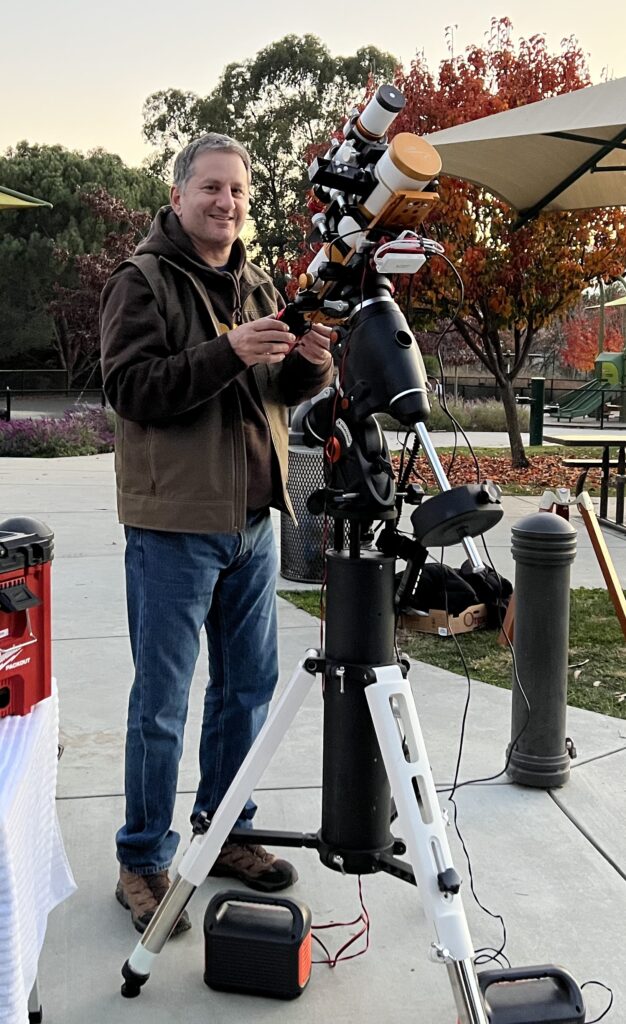
By: Loki Ingalls
My favorite astronomer is Charles Messier. I love the story of the Messier objects; it’s really funny to me how seemingly random objects that he numbered are now incredibly popular objects for many astronomers to view and astrophotographers to capture. It’s really crazy how one person can make such a big impact! The Messier Marathon, named after his achievements, is something I love and wish to complete one day. I learned about him when I started becoming more active in SMCAS over a year ago, and whenever I go stargazing, I tend to gravitate towards looking at Messier objects as they include some of my favorites and I want to eventually capture all of them. Messier’s a familiar name at star parties and I like to tell his story to visitors.
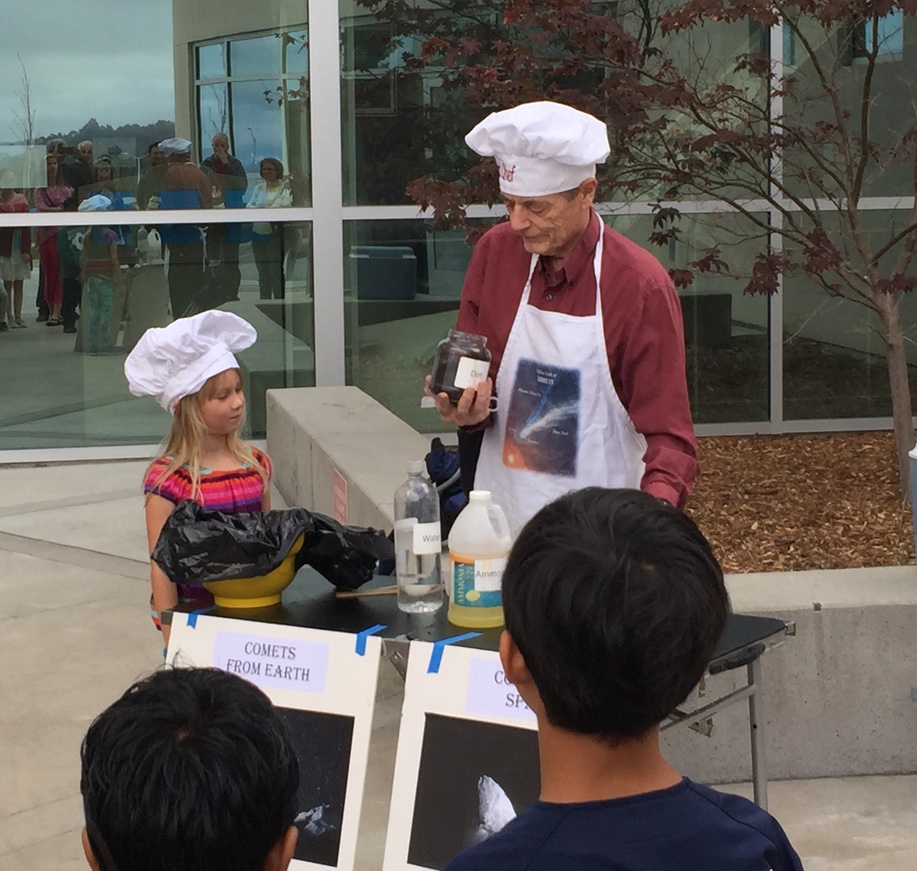
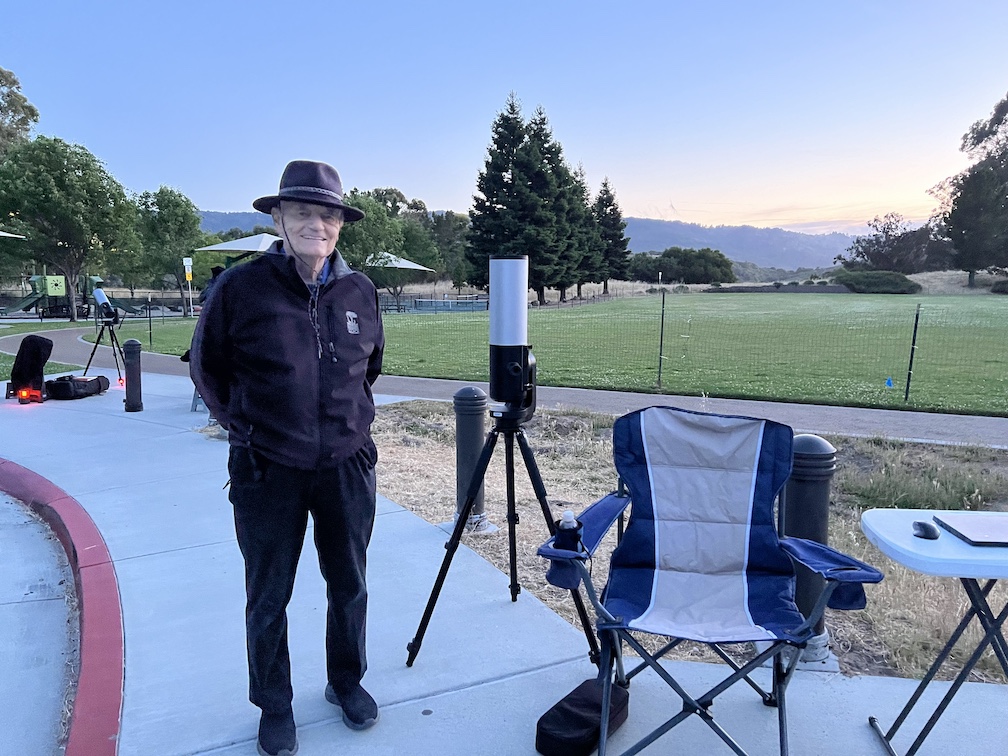
However, I would be lying if I said Messier was my only favorite astronomer. My other favorite astronomer is none other than Ed Pieret, my grandfather, longtime board member and member. I grew up looking through his telescope on his deck (I don’t remember life before he inspired my love for space!) and helping him at CSM events. I always smile when I see pictures of me as a child with him during his Comet Chef show. My friends and classmates always recognize him as Astronomer Ed because he would visit our classes to talk about astronomy; I was always so proud to be his grandchild.
Astronomy is incredibly special to me because it connects me to him and working with him on his passion brings me joy above anything else. It’s because of him that I’m acquainted with the night sky, and I’ll always think about him whenever I’m out stargazing.
Greetings to the Society,
As spring winds down and summer begins, let’s hope for more clear skies than cloudy ones! Warmer weather brings more opportunities for stargazing—and for getting involved with the club. It’s also time to start thinking about elections for a new Board of Directors.
Have you considered becoming more active in the club? We welcomed a few new faces to the board last year, and we’d love to add more! If you’re worried about the time commitment, don’t be—it’s just one meeting a month, and every bit of help counts. Nominations will open soon, so please give it some thought.
The Eta Aquariid meteor shower, caused by debris from Halley’s Comet, peaks on the nights of May 5–6. If skies are clear, it should be a great show for early risers.
Also making headlines is the potential outburst of the “Blaze Star”—T Coronae Borealis. This rare recurrent nova, located in the constellation Corona Borealis, could erupt in the coming weeks. It’s a once-in-a-lifetime opportunity for many amateur astronomers, so stay tuned and keep your eyes on the northeast sky! Hopefully we will see it this year after is was a no-show last year.
June 21 marks the summer solstice, the longest day of the year—and the official start of summer. From then on, the nights will slowly begin to lengthen again.
Looking for truly dark skies? Don’t miss the Golden State Star Party, happening June 25–29. It’s a fantastic opportunity to get away from the city and experience breathtaking views of the night sky with fellow enthusiasts.
As we set our sights on the stars, let’s hope for cloudless nights and spectacular celestial views. Whether you’re joining an event, observing from your backyard, or considering a board nomination—thank you for being part of our community.
Clear skies and happy viewing!

River trekking in Taiwan.
Michael Cooke
President, San Mateo County Astronomical Society
By: Peter Adams, Sequoia Gem and Mineral Society
We’ve all heard about rocks in space. Maybe you’ve even got a piece of a meteorite — cool stuff, especially if you found it yourself. Even if you bought one? Still cool. But as it turns out, even NASA has trouble finding asteroids and figuring out exactly what they’re made of. One asteroid in particular is getting a lot of attention right now: Psyche.
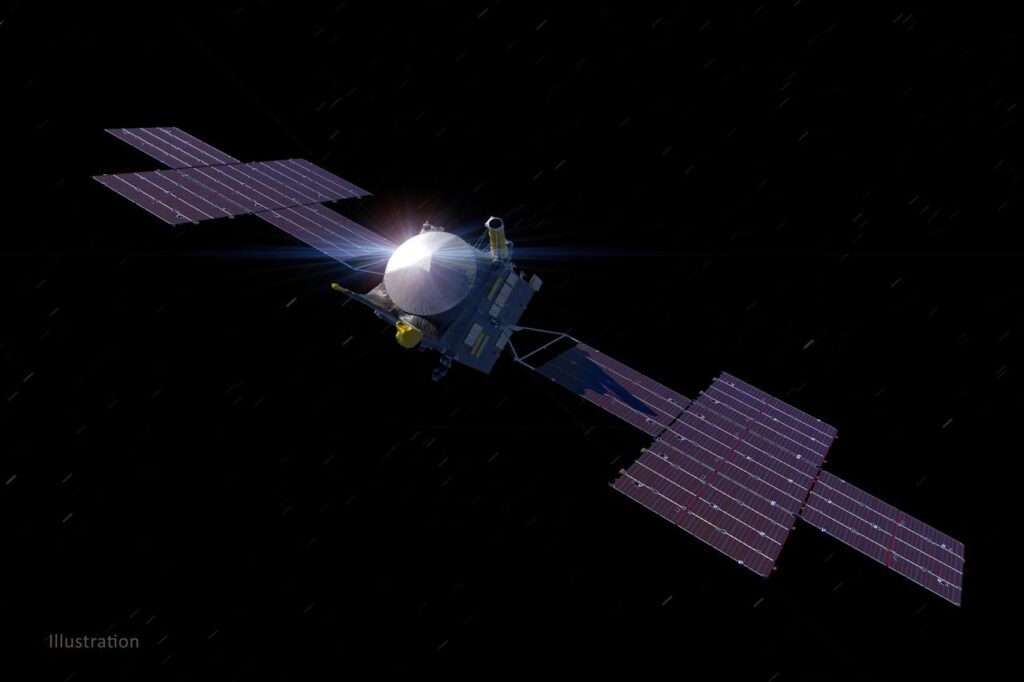
NASA’s Psyche mission is focused on — you guessed it — an asteroid named Psyche. This space rock is hanging out about three times farther from the Sun than we are here on Earth. So what’s the big deal with this hunk of metal and rock?
Well, Psyche isn’t just any asteroid. It’s about 173 miles wide and 144 miles long. And like most space rocks, it’s not a perfect little sphere — it’s a lumpy, bumpy, cratered chunk of stuff floating through the void. So far, sounds like the usual asteroid story. But here’s where it gets interesting.
NASA’s been eyeing Psyche for a while. Based on remote observations, they think it’s made up mostly of metals and silicates — imagine glass fused with metal. Some estimates suggest it could be 30% to 60% metal. But what are the metals?
No matter how good your telescope is, there’s only so much you can learn from millions of miles away. So NASA’s sending a probe to check it out up close. If their estimates are right? Then we know our space-detective tech is seriously impressive. If they’re wrong? Still a win — we learn what to improve.
This mission is not just about knowing what Psyche is made of. This mission will be a proving ground for future asteroid missions — whether it’s landing gear on a small space rock or testing out the idea of mining asteroids. (Yes, that’s a real goal. One day we might be digging up rare elements out in deep space.)
So picture this: someday, you’re a rockhound in the Kuiper Belt, cruising between asteroids, looking for that one glittering gold nugget floating through space. It’s a wild thought. Probably won’t happen in my lifetime — but hey, it’s on the horizon.
We might even need to nudge a chunk of space rock into a different orbit.
Leavrite joke. A meteorite is great to find. A meteor – wrong is a waste of money to buy, but might still be a very nice rock to find.


