Free and open to the public. In the College of San Mateo Planetarium. Free parking in nearby lots, eg Lot S (5) or Lot R. Click here for Google map/directions
CSM Astronomy Department 2025 Michael Chriss Scholarship Award Winners Presentations
BelleBlevins-Kurt: Binary Star Discovery & Behavior
Malia Smith: All About JuMBOs
Each speaker will do a short presentation on their research. Abstracts and biographies below.
BelleBlevins-Kurt:
Binary Star Discovery and Behavior
Binary star systems and multiple star systems currently make up more than half of the star systems we observe. These stellar systems were first discovered in 1803 by William Herschel, and since then, they have maintained their place as objects of interest; we can only obtain so much information from a star alone, but a star system allows us to gather much more information on multiple stars based on how they interact with each other. One binary star system that astronomers have been keeping a close eye on is T Coronae Borealis, consisting of a white dwarf and red giant star. Due to its close orbit, the white dwarf component collects hydrogen from the red giant, creating a recurring nova explosion where it blasts off its shell of hydrogen about every 80 years. According to recent reports from astronomers, we’re close to the predicted time for the next nova explosion. In this paper, we seek to synthesize information on the discovery and behavior of binary star systems like T Coronae Borealis.
Belle is currently 17 years old and began her studies in astrophysics two years ago at College of San Mateo. Since then, she has been focused on advancing her knowledge of science, especially in regards to astronomy and physics. Additionally, Belle dedicates time to astronomy outside of class, as she runs the College of San Mateo Astronomy Club and volunteers at the school’s observatory weekly. Her next academic milestone will be when she transfers to a 4-year university for astrophysics in the fall of 2026.
Malia Smith:
All About JuMBOs
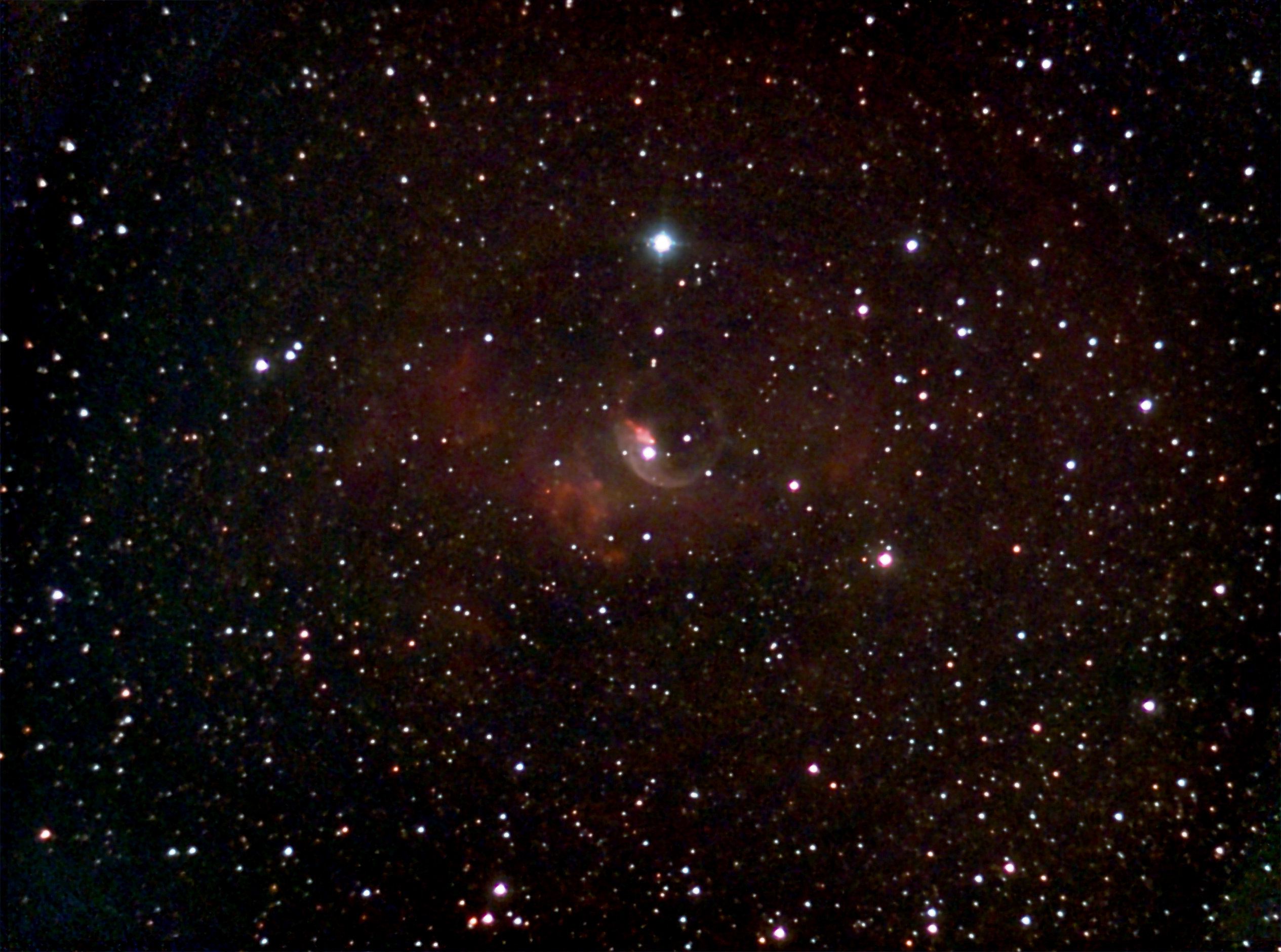
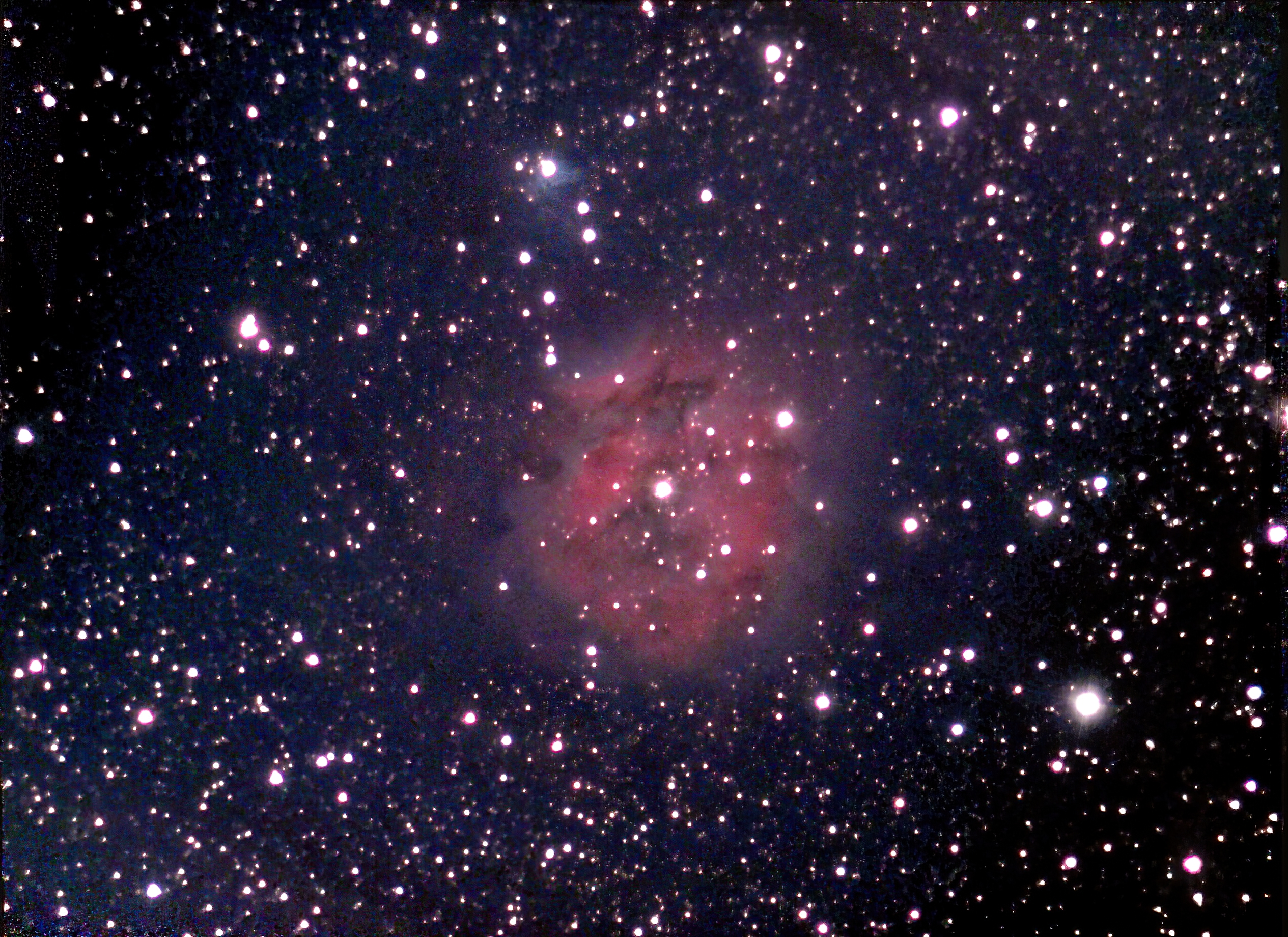
In late 2023, astronomers using NASA’s James Webb Telescope discovered 40 pairs of Jupiter-mass binary Objects, otherwise known as JuMBOs, within the Orion Nebula. This discovery has challenged long-held theories of planetary and stellar formation, raising intriguing questions and opening up new possibilities for refining our existing models of cosmic processes. Using data primarily from peer-reviewed research, this presentation explores the nature of JuMBOs, the leading hypotheses on their formation, and why their existence is shocking to the scientific community. Additionally, it includes a brief section detailing my personal observations of the Orion Nebula through astrophotography, offering some stunning visuals to complement the broader scientific discourse.
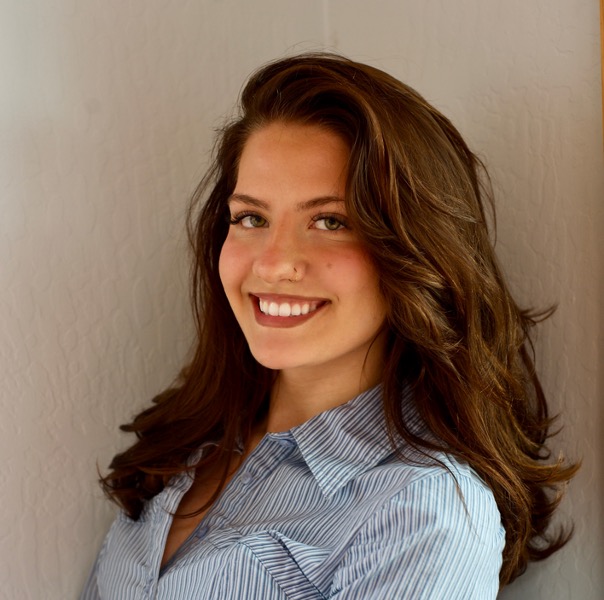
Malia is an honors program student actively working toward her associate’s degree in physics, with plans to transfer to a four-year university to pursue a bachelor’s degree in astrophysics. Her long-term goal is to earn a master’s degree and work in a research role at a leading space science organization. Beyond her passion for space science, Malia has a deep interest in psychology, mathematics, and chemistry. She is also a talented artist whose work has been recognized at the Coastal Arts League Gallery in Half Moon Bay. An avid traveler, she has visited 14 countries and is a certified scuba diver. In her free time, Malia enjoys oil painting, reading true-crime novels, and embracing new adventures. Known for her determination, creativity, and relentless curiosity, she is committed to pushing the boundaries of knowledge in both science and art. More information about her is in this great YouTube video produced by the College of San Mateo:
The San Mateo County Astronomical Society will forgo its usual general meeting and presentation for the month of April to support a special event at the College of San Mateo Friday, April 18. The event, “Art, Science & Visual Metaphors,” will be held at the CSM Theatre (Building 3) on the College of San Mateo’s campus, 1700 W. Hillsdale Blvd., San Mateo. The presentation will take place from 7:30pm to 10pm. Admission is free and the insights you will gain are invaluable.
This event is part of Professor Mohsen Janatpour’s esteemed series of annual presentations, now in its 36th year. It is presented by the CSM’s Associated Students and the Math/Science Division. The evening promises to be an illuminating exploration of the interplay between art, science, and the use of visual metaphors.
Art, science and visual metaphors are three seemingly disparate fields that converge in fascinating ways. Art, as defined by art philosopher Susanne Langer, is “the creation of forms symbolic of human feeling.” Art allows us to express and communicate the depths of human emotion and experience through symbolic representations. Science, on the other hand, is defined by the Science Council as “the pursuit and application of knowledge and understanding of the natural and social world following a systemic methodology based on evidence.” Science seeks to uncover truths about our universe through empirical evidence and rigorous methodologies. Visual metaphors serve as a bridge between the tangible and the intangible. They enable us to understand abstract concepts by relating them to familiar, perceptible ideas. By creating a visual representation of an abstract concept, metaphors help us grasp complex ideas that our senses alone can’t access.
During this year’s Art & Science Presentation, the connections among these three concepts will be examined, offering attendees a deeper understanding of how they interrelate and enhance our comprehension of the world around us. It promises to be a thought-provoking and insightful exploration into the realms of art and science. Professor Mohsen Janatpour, a respected individual in the field, will lead the presentation, drawing on his extensive knowledge and passion for the subject.
The evening’s schedule will include:
A comprehensive presentation by Professor Janatpour, delving into the connections between art, science, and visual metaphors.
Engaging discussions on how visual metaphors can be used to convey complex scientific concepts.
Illustrative examples from various art forms that symbolize scientific phenomena and principles.
Following the presentation, attendees are invited to join the organizers for refreshments in the Theatre lobby. This will provide an opportunity to engage in further discussions, network with fellow attendees and share insights gained from the presentation. If weather conditions permit, the evening will culminate with an outdoor stargazing session. Telescopes will be set up in front of the Theatre, by members of the Society and CSM’s Astronomy Department. This activity will allow attendees to gaze upon the night sky and appreciate the wonders of the universe, bringing the event’s themes full circle. For more information about the event, please call (650) 574-6272 or email janatpour@smccd.edu.
In early March, the LSST camera was installed in the Vera Rubin Observatory on a Chilean mountaintop! SMCAS has been following the development of the LSST for many years in our monthly presentations, field trips, news updates, Event Horizon articles, and even our YouTube channel!
“The world’s largest digital camera made in the Bay Area has now been installed in Chile. The camera is the size of a car and could unlock new views of the universe. It’s called the Legacy Survey of Space and Time (LSST) camera. We are listed in the Guinness Book of World Records,” said Aaron Roodman, in this ABC7News article.
For more details on the Vera Rubin Observatory and the LSST, you can find a number of articles published on our website and in our Event Horizon newsletter. SMCAS President Michael Cooke wrote a great review of the LSST last August that was published in the Aug/Sep 2024 Event Horizon. For a timeline pictorial view of milestones in the 30 year history of the LSST since its first conception as a napkin sketch in the mid 1990’s, access the Vera Rubin Observatory website.
Some highlights of our journey with the LSST, beginning with the most recent event are:
On November 3 2023, Hannah Pollek, Mechanical Engineer at SLAC, spoke to us about the LSST, her work with the camera, and her hope to be there to help install it. Her talk description is posted on our website, and the video recording of her presentation is available on our YouTube Channel.
I recently reached out to Hannah to see if she was able to be at the Vera Rubin Observatory for the installation, and her kind reply is as follows;
Hi Marion! I am writing this email from the control room at the Rubin Observatory!! I have been going back and forth between California and Chile every two weeks for the entirety of 2025 so far, I was not present for the installation itself, but have been heavily involved in other summit operations in preparation for the installation and after the fact. It is a very busy and exciting time at the observatory, and we hope to get things ready to go on sky in the near future! Cheers, Hannah
On February 1 2019, Professor of Physics and Astrophysics at SLAC, Aaron Roodman, who was also responsible for the integration and testing of the LSST camera and wasquoted in the ABC7 article referenced above, spoke to us about the future of the LSST. At the time of his talk, LSST was an acronym for Large Synoptic Survey Telescope. His talk description posted on our website gives a good summary of what is planned for the LSST.
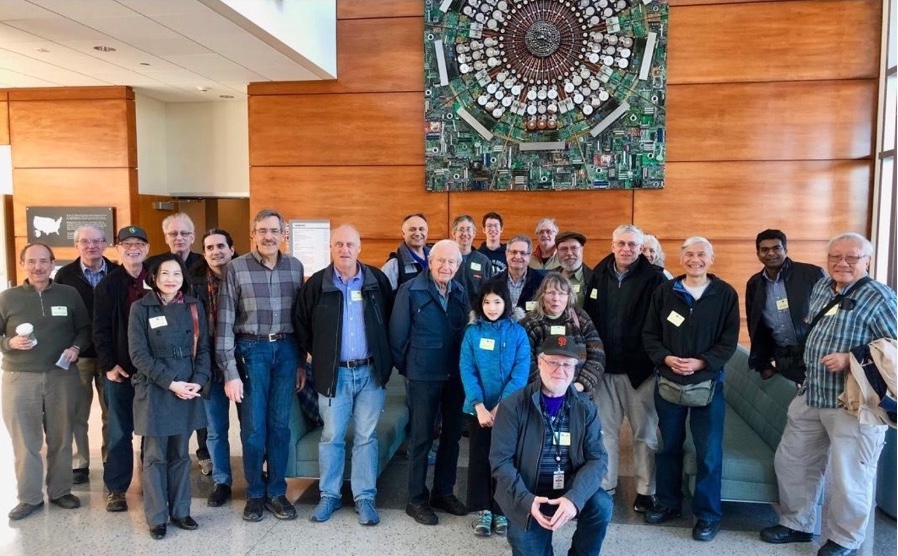
Twenty-three SMCAS members toured SLAC National Accelerator Laboratory’s astrophysics and cosmology projects in February 2019. Board Member and tour organizer Bill Lockman, kneeling in front, wrote a complete report starting on page 7 of the Jan-Feb-Mar 2019 Event Horizon.
The talk by Aaron Roodman was soon followed by a field trip to SLAC including the LSST clean room on February 22, 2019, arranged by former SMCAS Board member and long time member, Bill Lockman. Bill was also a UC Santa Cruz Senior Research Physicist in the Institute for Particle Physics there, as well as a Visiting Scientist at SLAC. This trip was documented by Bill in his article on page 7 of the Jan-Feb-Mar 2019 issue of the Event Horizon. In that same Event Horizon on page 5, you might notice another great article about the LSST by Ken Lum.
Our first formal presentation on the LSST was on November 1 2015, in a talk by Joshua Meyers, at the time a post doctoral student at Stanford, who was working on aspects of the LSST. Joshua is now a Staff Scientist at SLAC. In his talk, he covered the science mission of the LSST. His talk description is on the SMCAS website, including a couple photographs of the mirror manufacturing in process and the proposed observatory building.
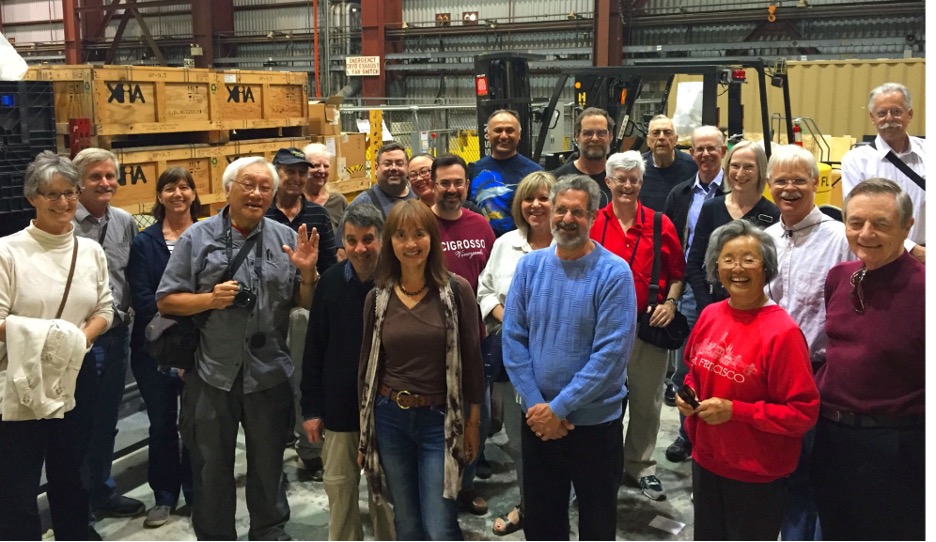
Twenty-three SMCAS members on the May 8, 2015 SLAC tour.
And some of you may recall our first exposure to the LSST was on May 8 2015, as part of a SMCAS field trip to SLAC. On this tour we were given a private tour of the LSST assembly clean room just as it was completed and very empty. The tour was led by friend of SMCAS, Mandeep Gill, at that time a Research Scientist and Observational Cosmologist at SLAC, now a Research Staff Member at the University of Minnesota School of Physics and Astronomy. This field trip was documented, with many pictures in an article on pages 8 of my June 2015 Event Horizon article.
Let us know if you see yourself and where in each of the pictures.
Newer SMCAS members, see if you can identify some of our long-term members!
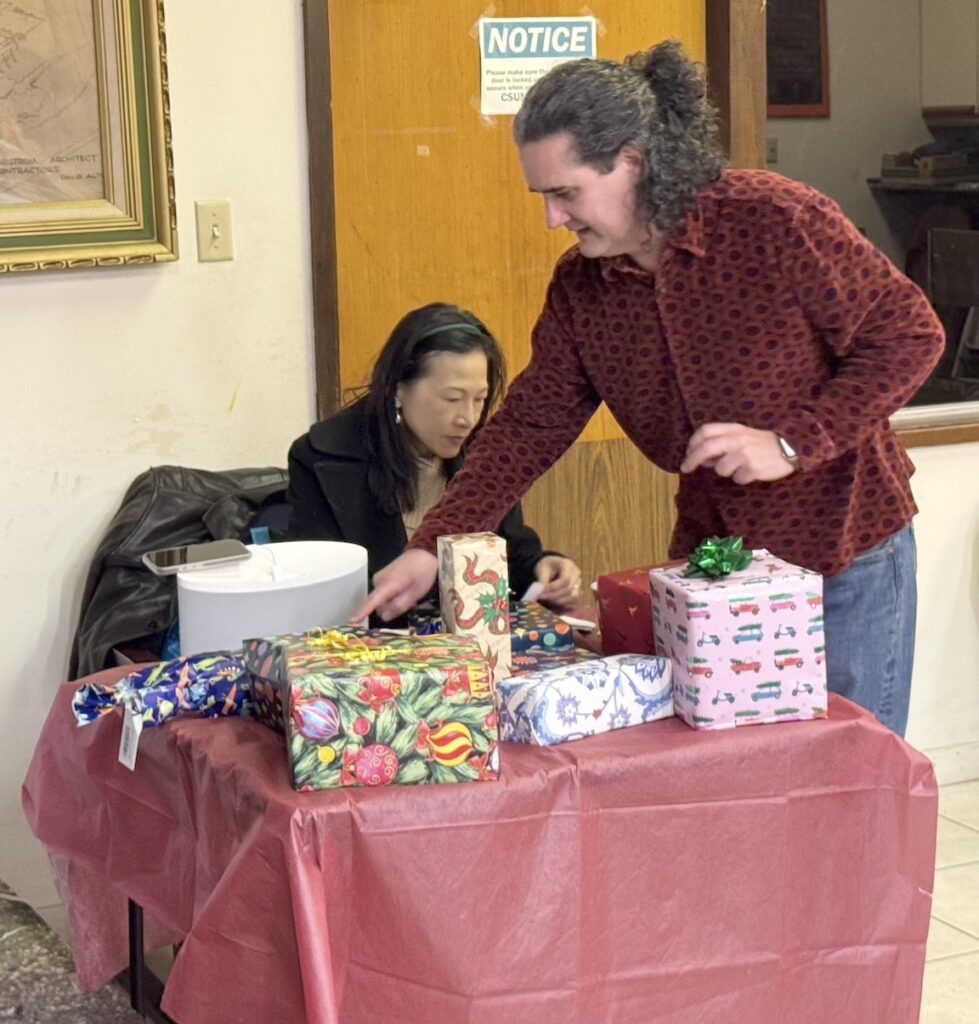
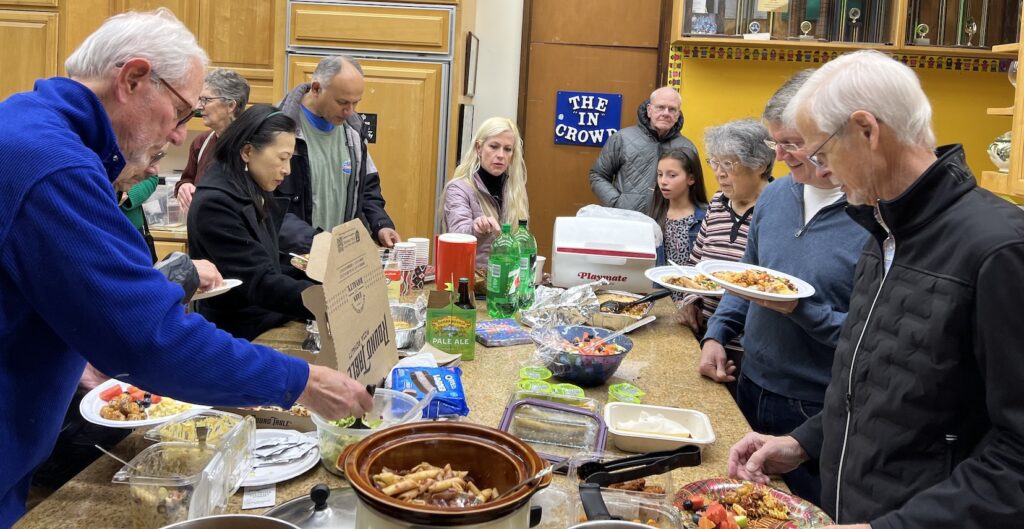
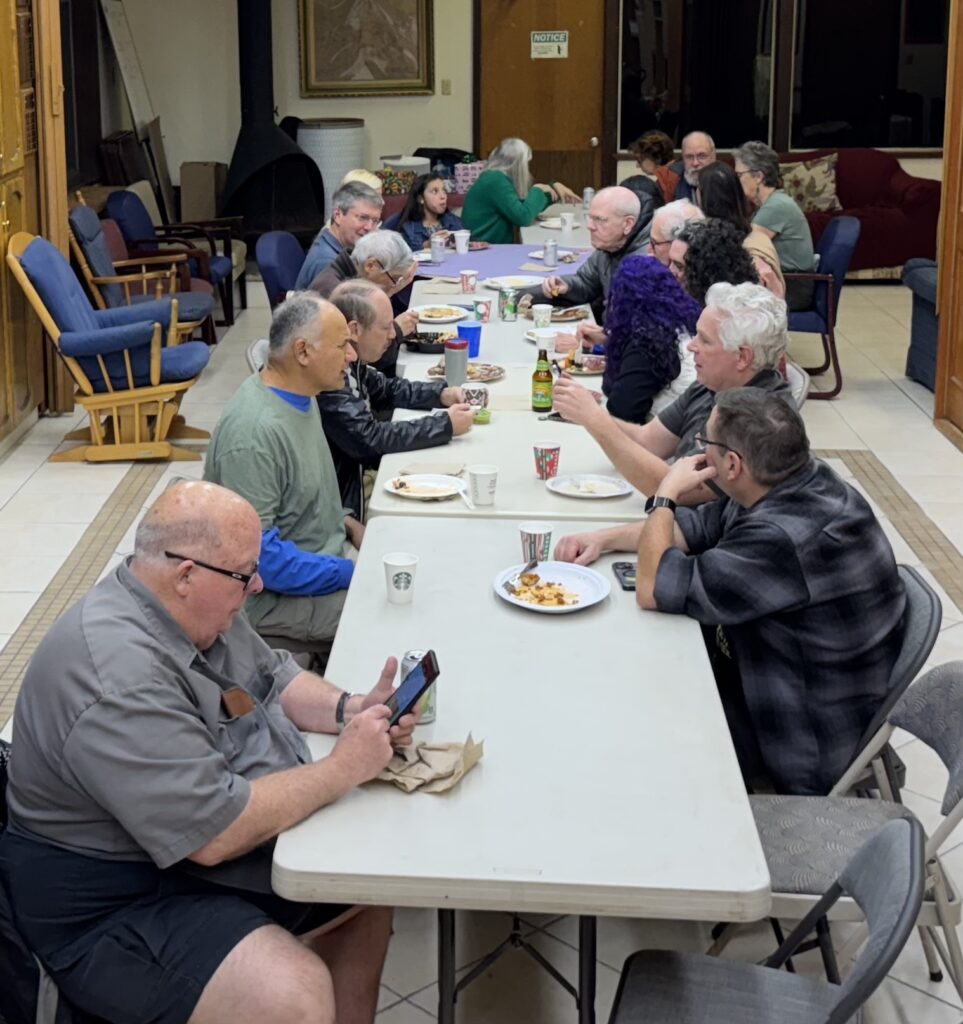
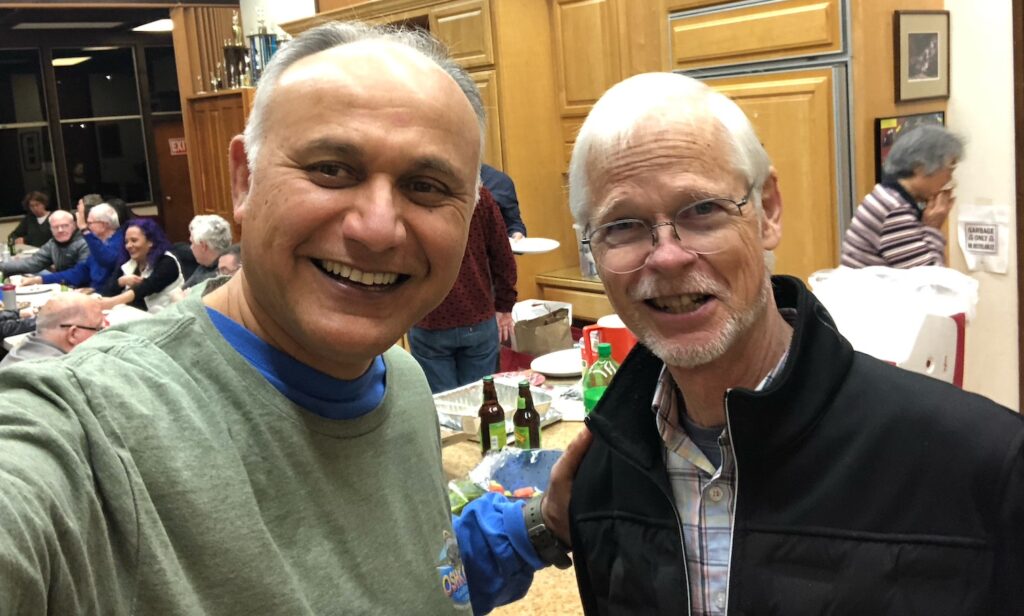
The Society had a good turnout for their annual holiday celebration on January 18 at Crystal Springs United Methodist Church, our usual spot for soirees. The evening was filled with camaraderie for our shared love of astronomy.
The celebration was a potluck with a variety and quality of the food ensured that there was something for everyone, such as, green salad, fruit salad, pizza and beer, chicken taquitos and a pasta bake with meat and cheese.
The best part of the celebration was the White Elephant gift exchange, mainly because there were good gifts! There was an array of unique and astronomical-themed gifts, with umbrellas adorned with constellations being a particular favorite. The “stealing” of gifts brought excitement and laughter to all participants.
Overall, the holiday celebration of the Society was a memorable event. It not only reflected the spirit of the past season but also the close-knit community of astronomy enthusiasts who come together to share their passion and joy. The evening was a perfect blend of fun, food, and friendship, leaving everyone looking forward to the next gathering.
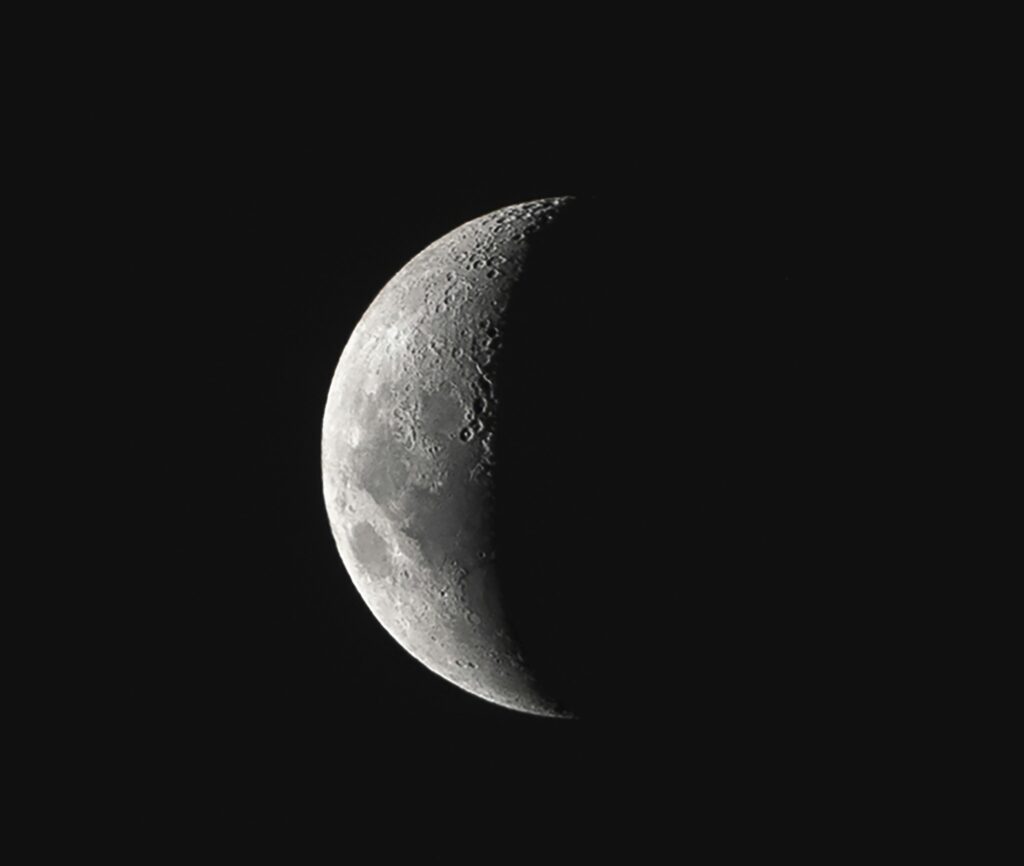
The Society invites all enthusiasts, families, and curious minds to our special Moon Viewing Star Party, Saturday, April 5, 7:30 pm to 10:30 pm. This event promises a night filled with wonder, education, and community spirit.
The moon, our closest celestial body, has always captivated humanity’s imagination. From ancient myths to modern science, it has played a crucial role in shaping our understanding of space. During this special event, we will delve into the moon’s geology, its phases, and its impact on Earth. Whether you’re a seasoned astronomer or a curious first-timer, this event will provide valuable insights and a unique viewing experience.
We will focus our telescopes on our celestial neighbor offering attendees a closer look at its craters, mountains, and other fascinating features. Our knowledgeable, Board Member Kevin Simpson, will provide insights and answer questions, and will be assisted by other Society board members.
Guidelines for a Great Experience
To ensure everyone enjoys the event, please follow these guidelines:
Respect the equipment: Telescopes are delicate instruments. Please avoid touching them unless given permission.
Mind the light: Use dim, red-filtered lights to preserve everyone’s night vision. If you arrive after dark, turn off your headlights if parking in Crestview’s parking lot.
Stay hydrated: Bring water to keep yourself hydrated throughout the evening.
Be curious: Feel free to ask questions and engage with our members.
What to Bring
Attendees are encouraged to bring the following items to enhance their experience:
Warm clothing: Evenings can get chilly, so dress in layers.
Blankets or chairs: For comfortable seating while stargazing.
Flashlight: With a red filter to preserve night vision.
Notebook and pen: To jot down observations and questions.
8:00 PM Speaker: Dr. Pascal Lee, Planetary Scientist
SETI Institute, Mars Institute, and
NASA Ames Research Center
The Moon & Mars: Amazing Places for Humans to Soon Explore, Part 2: Mars!
Free and open to the public. In the College of San Mateo Planetarium. Free parking in nearby lots, eg Lot S (5) or Lot R. Click here for Google map/directions
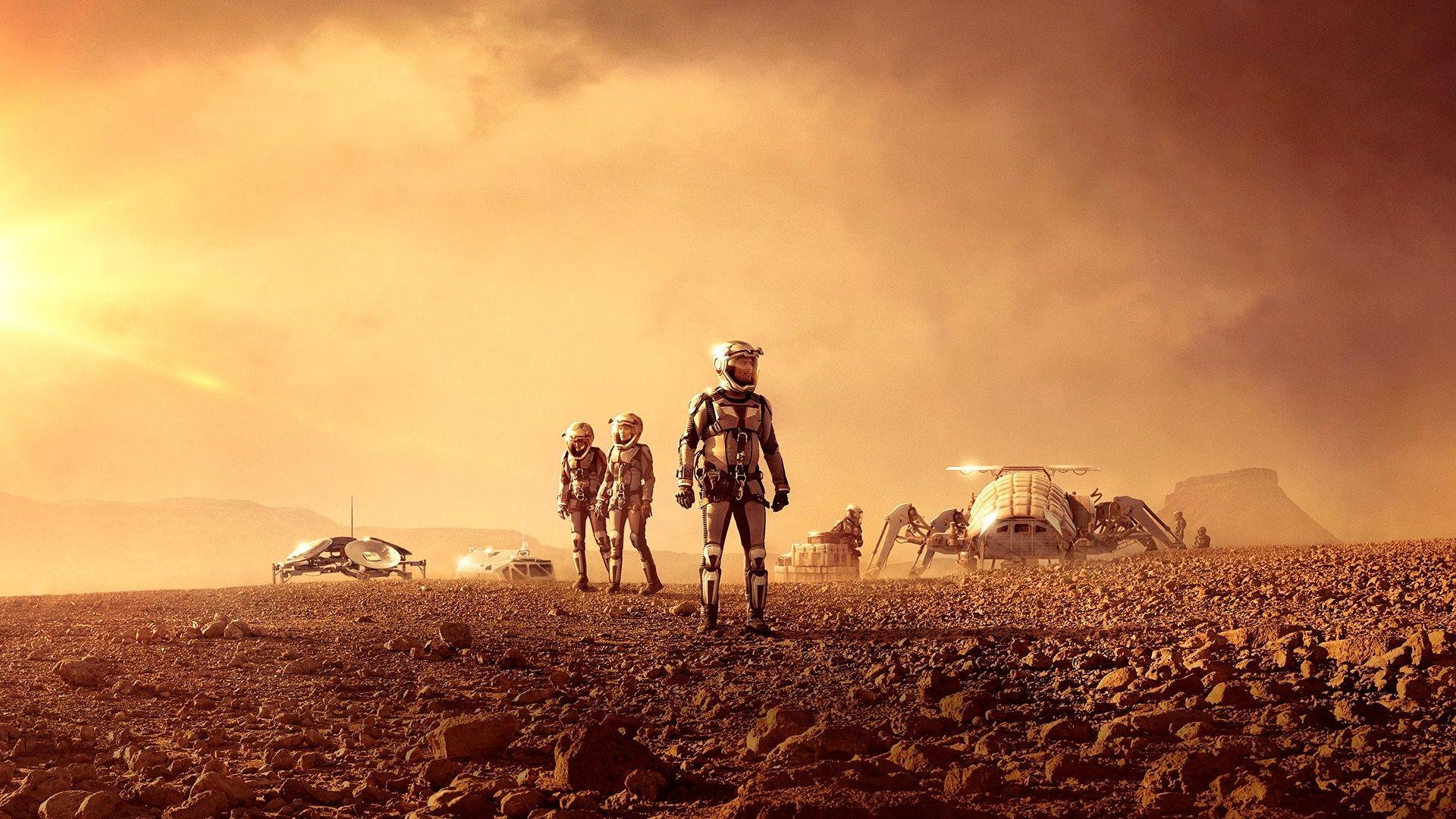
The Moon and Mars are humanity’s destinations in space this century. Why and how will we explore these worlds? When will we go? Where will we land, what will we see, and what will we do? And who will go?
Dr. Pascal Lee is a leading planetary scientist working on planning the future human exploration of the Moon and Mars. In Part 1 of this talk in March, we learned about humanity’s return to the Moon. In this Part 2 of his Moon and Mars talk, he will guide us through current and emerging new plans to journey on to Mars, the challenges we face, the wonderful opportunities ahead, and the amazing places humans will soon explore.
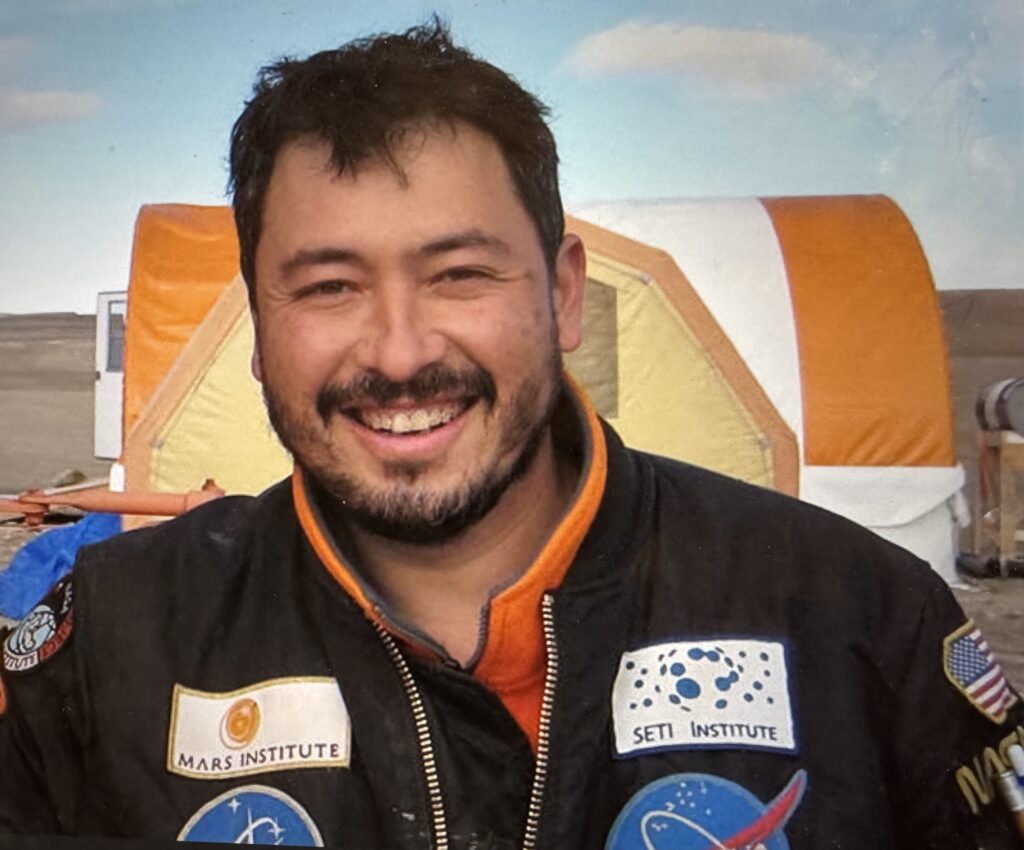
Dr Pascal Lee
Dr. Pascal Lee is a planetary scientist affiliated with the SETI Institute, the Mars Institute, and NASA Ames Research Center in Mountain View, California. He also holds the position of professor of planetary sciences at Kepler Space University.
Dr. Lee earned an M.E. in geology from the University of Paris-Sorbonne and an M.S. and Ph.D. in astronomy and space sciences from Cornell University, where he served as Carl Sagan’s last teaching assistant. His research focuses on the Moon and Mars, with a particular emphasis on planning future human exploration of these celestial bodies. Earlier this year, he made a significant announcement about the discovery of an ancient giant volcano on Mars, known as Noctis Volcano, which generated worldwide excitement.
Dr. Lee has led over 30 expeditions to the Arctic and Antarctica to study Mars through Earth-based analogs. He spent 402 days wintering over at an Antarctic base and also led the Northwest Passage Drive Expedition, an epic rover drive across the Arctic along the fabled Northwest Passage.
Dr. Lee is currently a member of the U.S. National Academies’ steering committee on “A Science Strategy for the Human Exploration of Mars.” He is the recipient of several honors, including the United States Antarctica Service Medal, the National Space Society Space Pioneer Award for Science and Engineering, the Space Frontier Foundation’s Vision to Reality Award, and the Sagan Prize for the Popularization of Science.
Pascal Lee enjoys flying and painting (but not at the same time). He is an FAA-certified helicopter commercial pilot and flight instructor, and an artist member of the International Association of Astronomical Artists (IAAA). He lives in Santa Clara, CA, where he is walked daily by his Australian Cattle Dog, King Kong, son of Ping Pong.
DIRECTIONS
Visitors to the presentation are also invited to join our SMCAS members at our pizza social (free pizza and soda drinks) prior to the presentation starting at 7:00 pm in nearby Building 36 room 110 (Building 36 is the building the Planetarium is attached to). We will move to the Planetarium shortly before 8:00 pm. Note that the Planetarium may remain closed until shortly before 8:00 pm.
The College of Mateo (CSM) general address is 1700 W Hillsdale Blvd, San Mateo, CA. It is off the Hillsdale Blvd exit from HW 92 in San Mateo. Proceed north on Hillsdale Blvd to where it turns into Perimeter Road, which will take you to the Planetarium and Building 36 Parking lots. Better directions can be generated from the Google Maps Directions feature when accessing the Planetarium location on Google maps. (click here). Parking is free in the well lighted lots near the Planetarium: Staff lat S (sometimes shown as Marie Curie Lot 5), Lot R (Staff and Visitor), or other nearby lots such as Q if Lots S and R are full. A more detailed map of the CSM campus can also be found on the CSM website here.