Blog

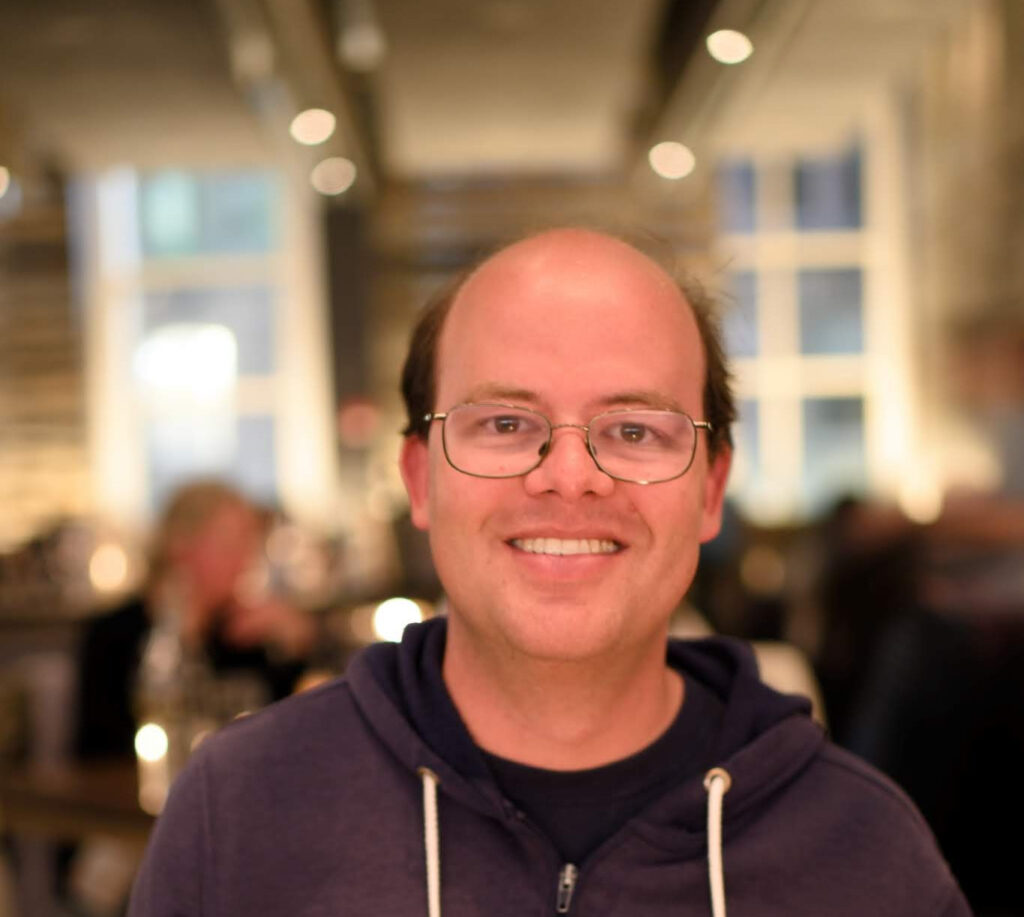
Speaker: Dr Edward Balaban

Speaker: Dr. Edward Balaban, Research Scientist

NASA Ames Research Center

Fluidic Telescope (FLUTE):

Enabling the Next Generation of Large Space Observatories

Free and open to the public. Free Parking in nearby lots.
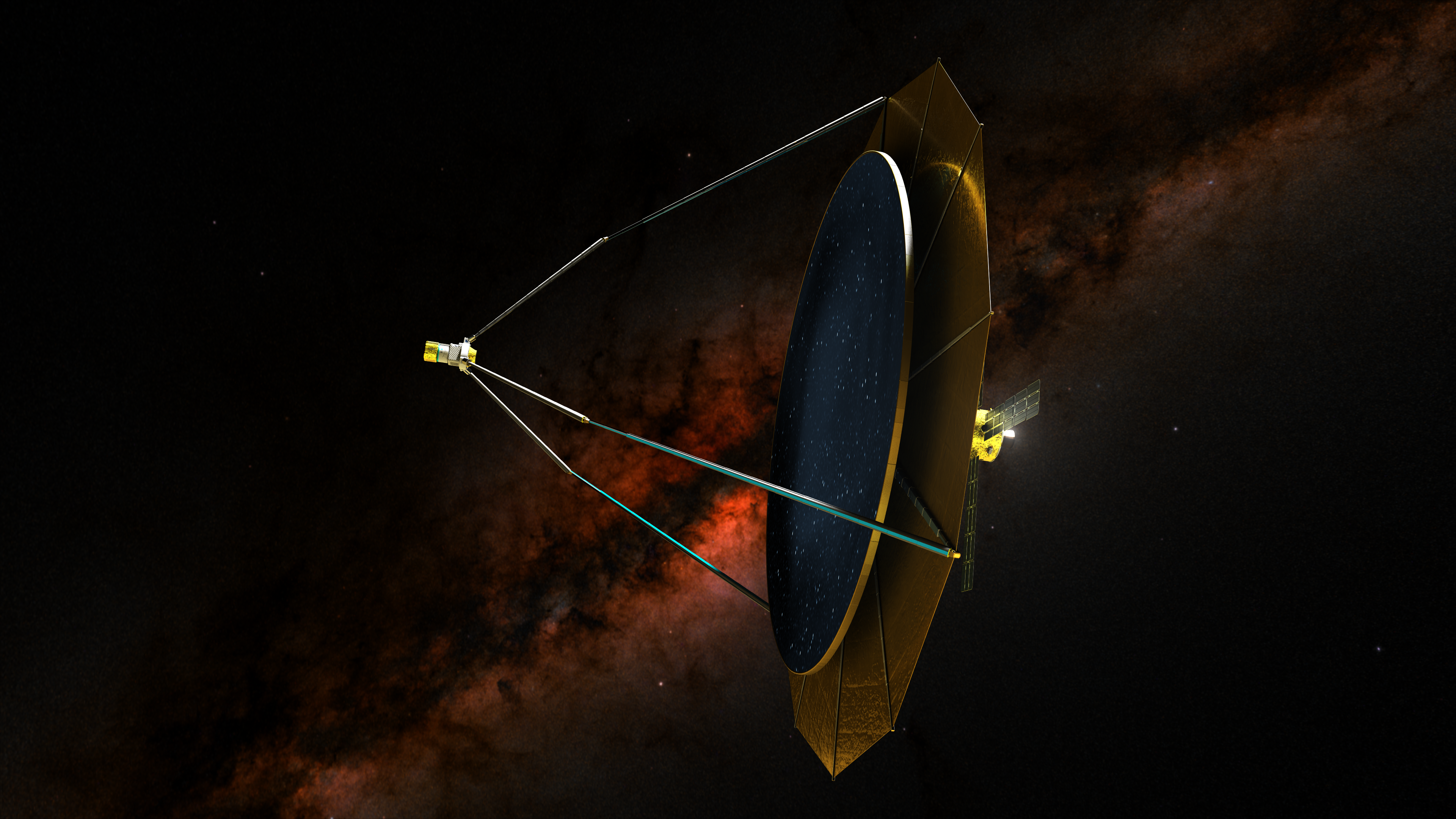
The future of space-based UV/optical/IR astronomy requires ever larger telescopes. The highest priority astrophysics targets, including Earth-like exoplanets, first generation stars, and early galaxies, are all very faint, which presents a challenge for current and next generation telescopes. Larger telescopes are the primary (if not only) way to address this issue. With mission costs depending strongly on aperture diameter, scaling current space telescope technologies to aperture sizes exceeding 10 meters does not appear economically viable. Without a breakthrough in scalable technologies for larger telescopes, future advances in astrophysics will slow down or even stall.

The FLUTE (Fluidic Telescope) project proposes to overcome the current scaling limitations for space optics via a novel approach  based on fluidic shaping in microgravity. This technique has already been successfully demonstrated in a laboratory neutral buoyancy environment, in parabolic microgravity flights, and aboard the International Space Station (ISS). Theoretically scale-invariant, this technique has produced optical components with superb, sub-nanometer surface quality.  In this presentation, Dr Edward Balaban will present the results to date and outline the work in progress, including FLUTE mission concepts currently under development that may enable the Next Generation of Large Space Observatories!

We propose a mission concept for a space observatory with a large-aperture (50-meter) unsegmented primary mirror suitable for a variety of astronomical applications. The mirror would be created in space via a novel approach based on fluidic shaping in microgravity, which has already been successfully demonstrated in a laboratory neutral buoyancy environment, in parabolic microgravity flights, and aboard the International Space Station (ISS). Theoretically scale-invariant, this technique has produced optical components with superb, sub-nanometer (RMS) surface quality. 
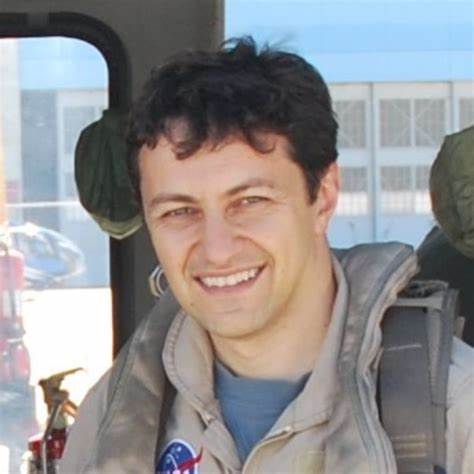
Balaban is a research scientist at NASA Ames Research Center and is 
the NASA Principal Investigator for the Fluidic Telescope (FLUTE) project. His professional interests include robotics, autonomy, artificial intelligence, and development of innovative space missions.  He is also the lead for strategic mission planning on NASA’s Volatiles Investigating Polar Exploration Rover (VIPER) mission and is also a member of VIPER’s Science and Mission Operations teams (VIPER is a mission to land a mobile robot in a South Pole region of the Moon in late 2024 to characterize deposits of water ice and other hydrogen-containing volatiles).  During his years at Ames, he has been involved in a variety of R&D and mission projects, including the X-34 experimental reusable space plane, autonomous robotic planetary drill (Drilling Automation for Mars Exploration project), and the K-11 planetary rover prototype. He was one of the creators of the Personal Satellite Assistant (PSA), a robot designed for operating on the International Space Station and a predecessor to the current Astrobee robot.  He holds a bachelor’s degree in Computer Science from The George Washington University, a master’s degree in Electrical Engineering from Cornell University, and a Ph.D. in Aeronautics and Astronautics from Stanford University. 

He has held a Private Aircraft pilots license since 2007.
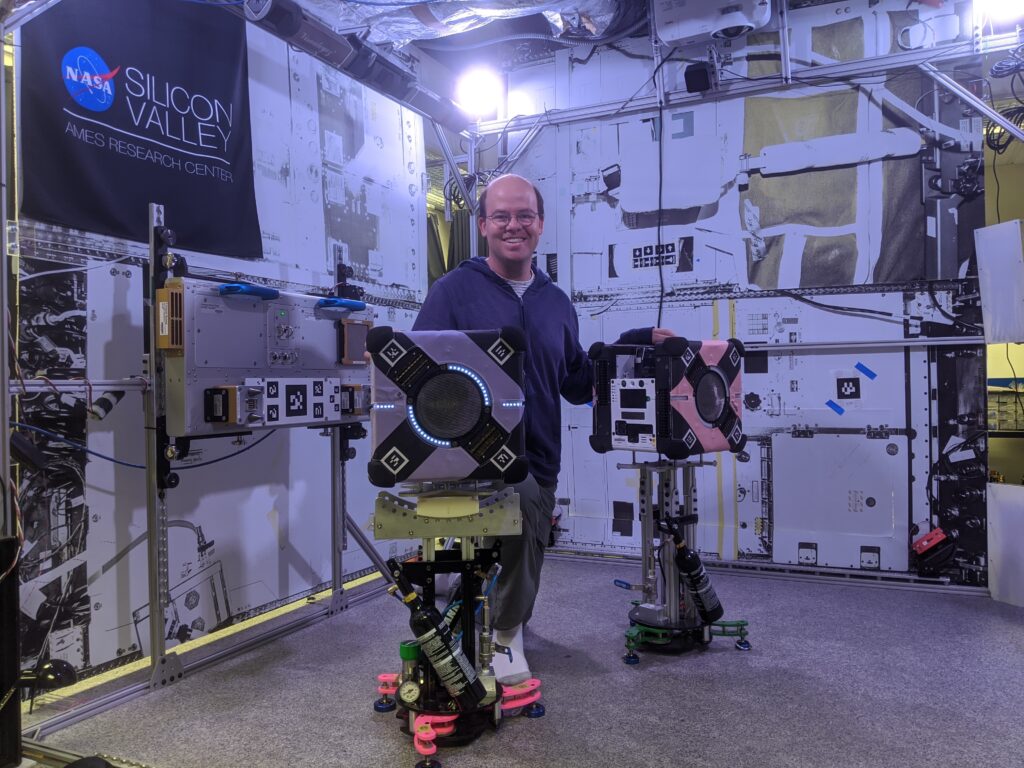
Speaker: Brian Coltin

Speaker: Dr. Brian Coltin, Roboticist

NASA Ames Intelligent Robotics Group

Astrobee! The ISS Robotic Free Flyer

Free and open to the public. Free Parking in nearby lots.

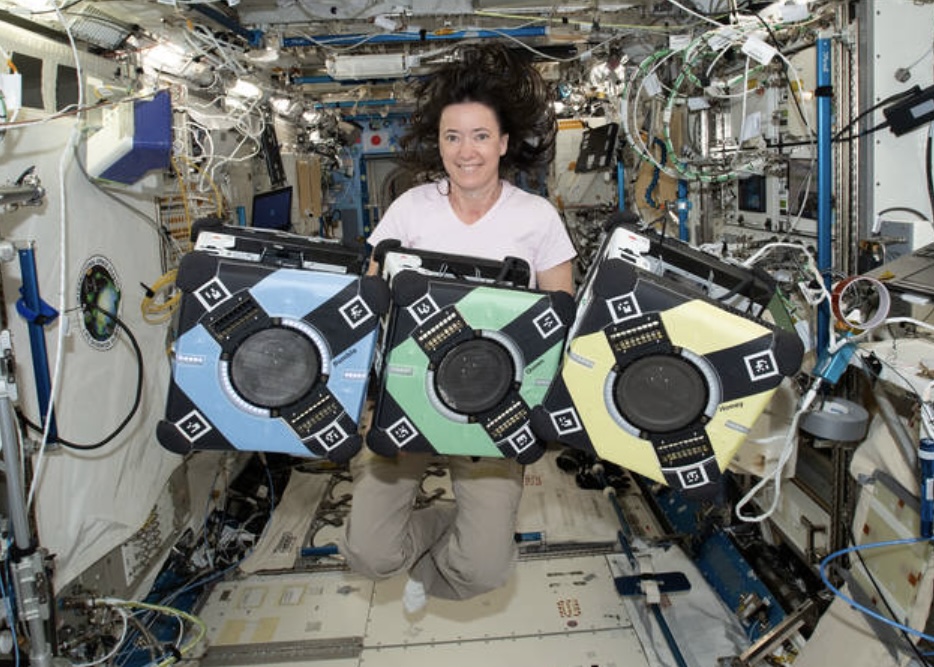
The Astrobees are free-flying robots that operate inside the International Space Station (ISS) and were launched to the ISS in 2019. Designed as a mobile camera, an astronaut assistant, and a research platform, they have successfully performed hundreds of activities in space supporting dozens of research projects. The robots were designed to overcome multiple challenges unique to the ISS environment, including safety, upgradeability and maintainability, limited mass and computation, and unique localization challenges from lack of gravity and a constantly changing environment.  In the future, robots will play a significant part in NASA’s mission to return to the Moon as well as other deep space missions. Robots such as Astrobee, have the capacity to become caretakers for future spacecraft, working to monitor and keep systems operating smoothly while crew are away. This talk will give an overview of the Astrobee robots, with an emphasis on Astrobee’s development, robotic software, and its successful use on the ISS.

Brian Coltin is a roboticist and computer scientist. with the NASA Ames Intelligent Robotics Group, where he’s the software lead for for the Astrobee robots helping make Astrobees fly autonomously inside the International Space Station. He has also worked on the VIPER rover, lunar localization, applying computer vision to Earth science, and more. In addition, he also lead a project to automatically map floods from satellite imagery for disaster response, as well as contributing to multiple open source releases of Astrobee, ISAACDELTA, and Crisis Mapping Toolkit.

Previously, Brian received his Phd from the Robotics Institute at Carnegie Mellon University in 2014, where he specialized in planning and scheduling for multi-robot systems. While there he worked on the CoBot robots, which have traveled over a thousand miles autonomously, performing tasks for users in a multi-story office building. His Ph.D. thesis focused on scheduling these robots to perform pickup and delivery tasks, with transferring items between robots. At CMU, he also competed at RoboCup soccer in the Standard Platform League with the NAO robots.

Brian’s research interests include planning and scheduling, multi-robot systems, localization, computer vision, path planning, machine learning, Earth science, and more. He also enjoys backpacking and climbing mountains.

The Dawn of a New Era in Astronomy: The Vera Rubin Observatory

As we enjoy August 2024, the eyes of the astronomical world are fixed on a groundbreaking development in the Chilean desert. After 13 years of meticulous construction, the Vera Rubin Observatory is set to achieve “first light,” a pivotal moment when its 8.4-meter-wide mirror will collect light from the cosmos for the first time. Some of you may recall visiting SLAC and witnessing part of this telescope’s assembly—it was known as the LSST back then. Now, this extraordinary instrument, equipped with the most powerful camera ever built, is about to make history. This event marks the dawn of a new era in our exploration of the universe.

Move over, Euclid—there’s a new giant in town. The Rubin Observatory isn’t just another state-of-the-art telescope; it represents one of the most ambitious projects in astronomical history. Unlike other observatories that offer focused studies of specific celestial objects, Rubin is set to conduct a full survey of the entire sky every three nights. By dividing the sky into segments, it will return to each section every few nights, tracking any changes—whether it’s a new asteroid, a star going supernova, or even a distant black hole’s activity.

The scale of this operation is staggering. Over its 10-year mission, Rubin will detect approximately 20 billion objects and flag 10 million changes in the sky every single night. This will culminate in the collection of 60 petabytes of data—a volume 500 times greater than what the Hubble Space Telescope has amassed over the past 34 years.

But what makes the Vera Rubin Observatory truly revolutionary is its ability to keep pace with the rapid influx of data. The observatory is equipped with the most advanced digital camera ever built, boasting a 3.2-gigapixel sensor array. This colossal camera will capture the universe in unparalleled detail, producing images 267 times larger than those taken by a typical smartphone camera.

The Rubin Observatory’s main scientific objectives are just as impressive. It will create a comprehensive 3D map of the universe, which will be instrumental in tracing the distribution of dark matter, a mysterious substance that makes up about 85% of the universe’s mass but cannot be directly observed. By mapping the positions and movements of galaxies, the observatory will help scientists infer the presence of dark matter through its gravitational effects, providing crucial insights into how this elusive substance influences galaxy formation and evolution. While it promises to unveil countless known objects, perhaps the most exciting prospects lie in the unknown—the unexpected discoveries that will undoubtedly arise from the vast amounts of data collected.

As we prepare for this deluge of information, it’s clear that the Vera Rubin Observatory is poised to transform our understanding of the cosmos. This groundbreaking project will provide insights that could redefine our place in the universe, and the San Mateo County Astronomical Society will be able to witness this historic moment.

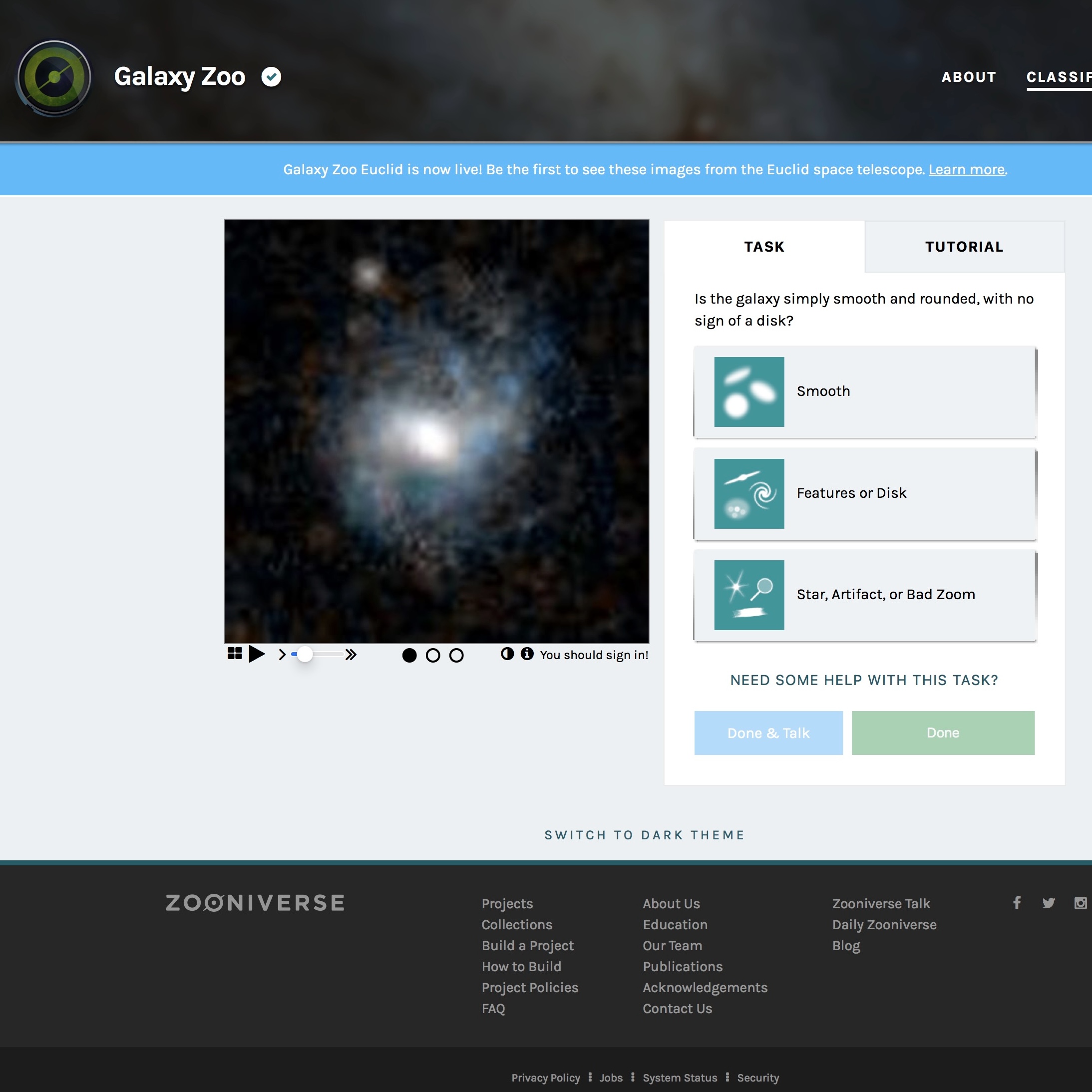
Galaxy Zoo Reopens with New Data from ESA’s Euclid Space Telescope!

The Galaxy Zoo is back with an exciting new project. For the first time, the public can explore data from the European Space Agency’s (ESA) Euclid space telescope. Every image in this dataset is likely one that no one has seen before, offering a unique opportunity to contribute to scientific discovery.

Euclid scientists need your help! The telescope captures images of tens of millions of galaxies, and they need your classifications to train their AI algorithms. These algorithms must be ready by the end of August, so they’re aiming for 100,000 volunteer classifications. This is The Euclid Challenge, and your participation is crucial.

Visit zooinverse.org to join the project, spread the word, and dive into this unprecedented journey through the cosmos!

SMCAS Annual Star-B-Q Party: Saturday, Aug. 3 ~ 6 p.m. at Crestview Park

All are invited to the SMCAS Annual Star-B-Q party on Saturday, August 3 at Crestview Park. This is a family friendly event so be sure to bring the kids. It starts at 6 p.m., but feel free to arrive and leave at your convenience since this will be followed by a Star Party.

Our gathering will be a potluck barbecue. Our board members will provide burgers, veggie burgers and polish sausages. You can bring any vegetables, salads, side dishes, and desserts and non-alcoholic beverages you would like to share. Try and label food for food allergies. Utensils will be provided but feel free to bring your own non-disposables, to be green, plus serving utensils for your dish. The SMCAS is allowed to use the back two picnic tables for our Star-B-Q. Please let Ken Lum know at lum40 (at) comcast.net as to how many people in your party are coming so we know how much meat to purchase.
We will also be closing the voting and installing the 2024-25 SMCAS board.
Don’t forget your telescope or just stay to look through other members’ scopes. That will happen at sunset, around 8:30 p.m.
You can email our board SMCASBD@groups.io if you have questions.

Exciting July 3 Star Party

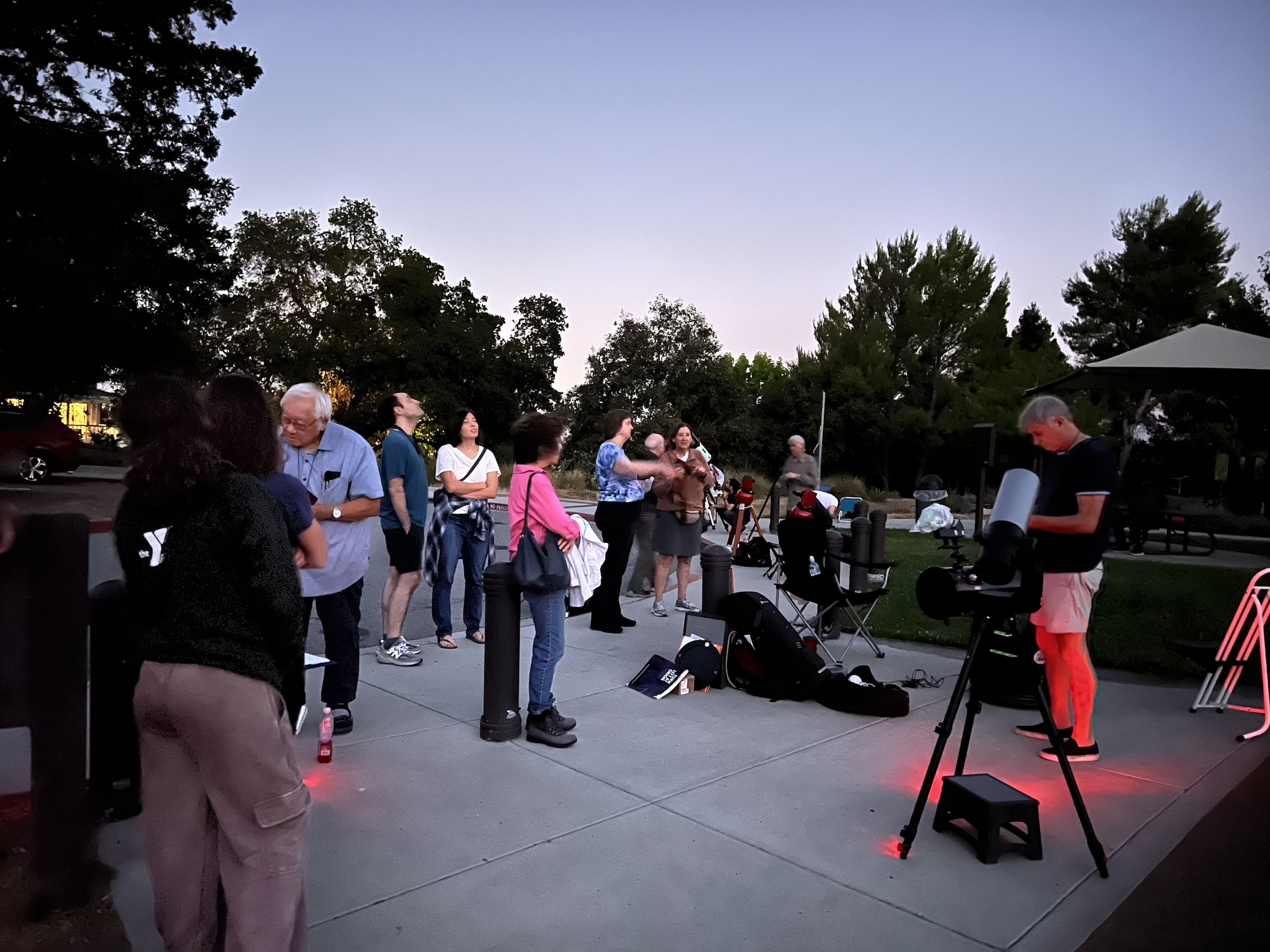
Stargazers wait for the sky to get dark enough for stargazing at July 3 Star Party.

If you haven’t heard yet, July 3’s Star Party was one of the most exciting we’ve had in a while. Besides being one of the most attended, there was a bit of both excitement and a bit of inconvenience when the sprinkler went off, not just once, but twice unusually early! The first time was at 9 p.m. There were a few chairs and even the base to a 10-inch Dobson telescope were set up in the area of one of the spraying sprinklers and all received some moisture as a result. Fortunately for the folding chairs, their material allowed them to withstand the unexcepted drizzle. The telescope made of particle board, a material known for not doing well when encountered with moisture, faired favorably, as well. This caused many of us to muse as to if it had happened before. Most of couldn’t recall another incident, except for our star gazers who stay after midnight. Two of our stargazers that usually stay late, confirmed that the sprinkler usually doesn’t go on until midnight.

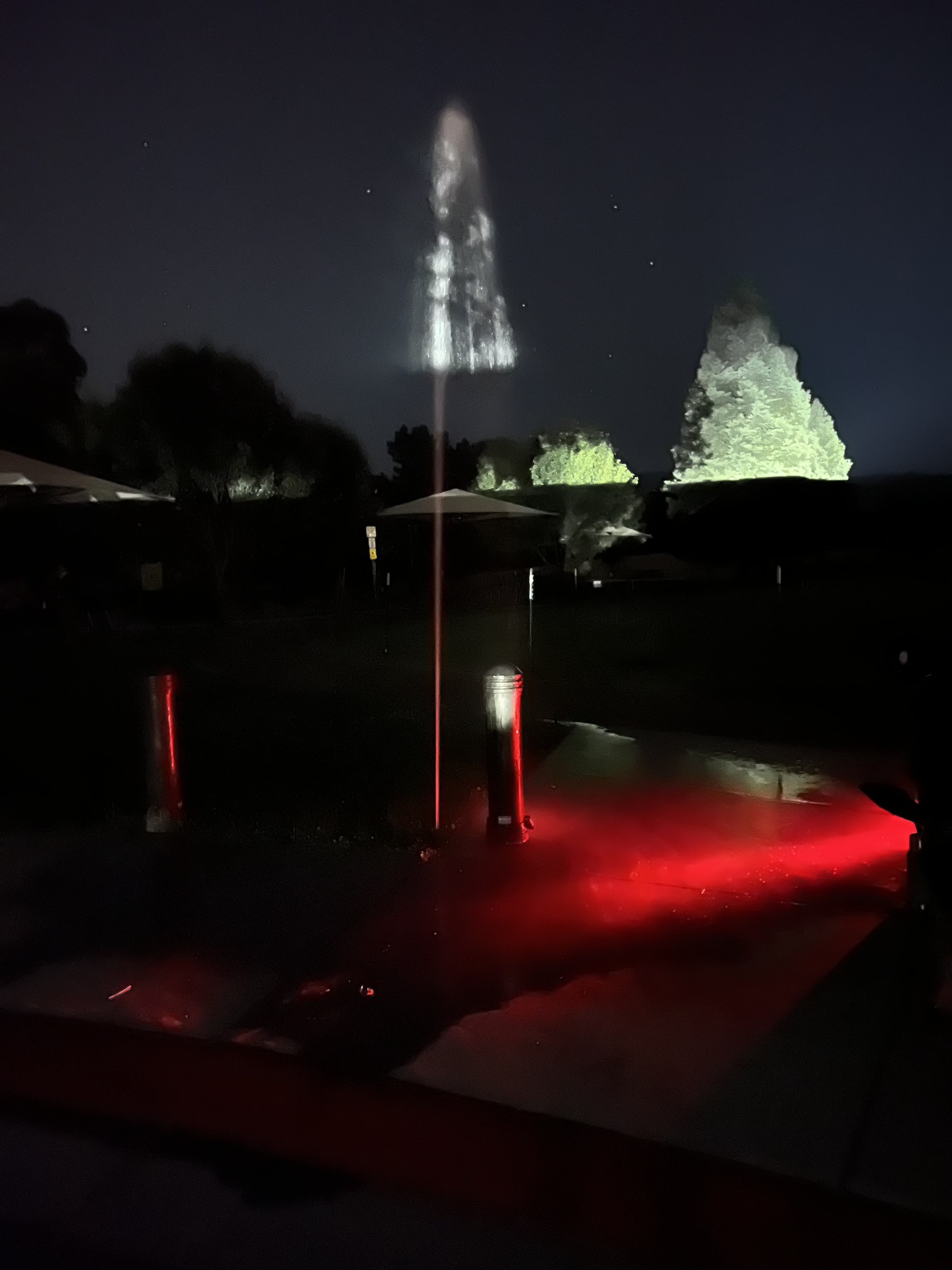
This is the sprinkler that lost its head and started shooting water straight up!

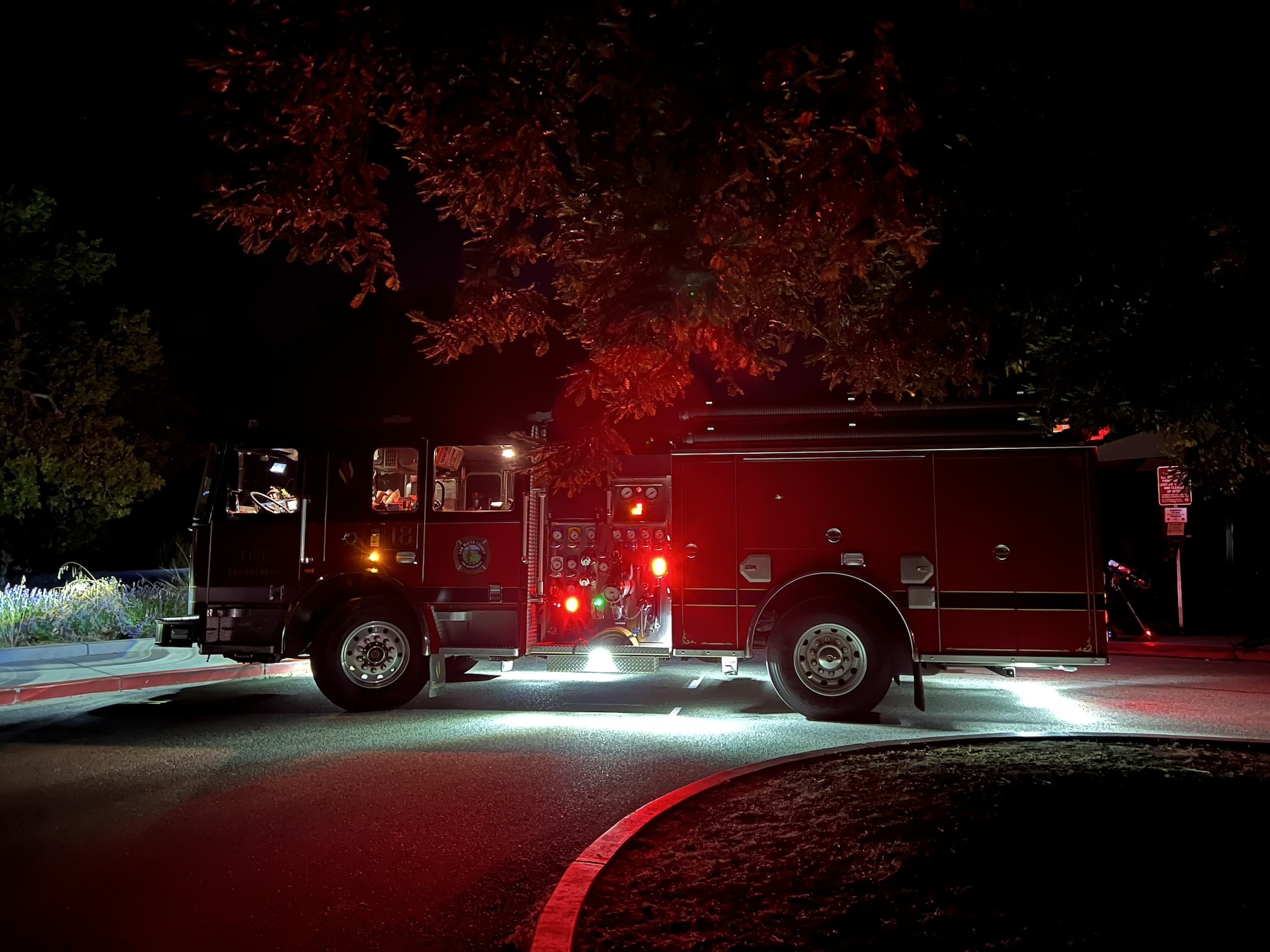
As if the sprinklers going off weren’t surprising enough, they actually when off again, about 20 minutes later, but this time the spraying sprinkler that caused the mishap previously, no longer had a sprinkler head causing a very large stream of water to shoot up to around 10-feet straight into the air. We’re not sure who alerted the fire department but we’re assuming someone did because next thing we knew the San Mateo County Fire Department truck was pulling into Crestview’s round about. By then the stream of water had been running for about 15 minutes. The firemen had a special tool to turn off the streaming sprinkler. It seemed it was the only sprinkler running at that time, too. All that were near gave a cheer when the ceased. Kevin Simpson, our most notable sharer of the skies and board member, offered the firemen to take a quick look through his telescope before leaving. They did and like most, were fascinated with what they saw. Kevin gave them one of our cards so they could look up the Star Party schedule. Perhaps in the future, we’ll have some firefighters and their families joining us, too!
One of the board members is followed up with San Carlos Parks and Rec Department about the incident and as it turned out, the maintenance crew was watering earlier during last month’s heat wave. The crew now has a list of our upcoming Star Parties so they should know when to put on the sprinklers at a later time.

Celestial Events and Society Updates: An Exciting End to Summer

Greetings to the Society, 

We are still eagerly awaiting the once-in-a-lifetime event of nova T Coronae Borealis, which erupts spectacularly every 80 years. Astronomers currently predict about a 70% chance that T Corona Borealis will go nova by September and a 95% chance that it will occur by the end of the year. This nova is expected to be the brightest one seen on Earth since 1975. Additionally, Comet C/2023 A3 is currently visible through telescopes (I have gotten some shots of it myself) and will pass perihelion at a distance of 0.39 AU on 27 September 2024, when it could become visible to the naked eye through October. So, chances are good for a remarkable September for all sky watchers.

Board Elections: A Voting Reminder

We are in the final stages of electing new board officers for 2024-25. To participate in the vote, you must be a dues paying member. Nominations have closed, and online voting for the SMCAS Officers and Board members for the 2024-25 term is now open. Contact Marion Weiler for more information. Voting will close at 6 p.m. on August 3 during our SMCAS annual meeting and Star-B-Que at Crestview Park in San Carlos, where in-person votes may also be cast.

Star-B-Que Event

Star-B-Que is a family-friendly event. Bring the kids, and arrive and leave at your convenience. Our gathering will be a potluck BBQ, with board members providing burgers, veggie burgers, and Polish sausages. Please see the invitation sent to SMCASnews group for more details or in the EH.

Astronomical Events and Society Updates

The Perseids annual meteor showers promise to be especially spectacular this year, but you’ll need to go to a dark sky location to truly appreciate it. The shower peaks on the night of August 11-12. Just two days after the Perseids, Jupiter and Mars will be in conjunction in the sky as seen from Earth after 1:30 a.m. on August 14. This will be the closest planetary alignment of 2024.

As September arrives, so does the start of our general meetings at the College of San Mateo Planetarium. General meetings and socials start at 7 p.m. in Room 110 in the ISC Building (36) and Speaker Presentations start at 8 p.m. in the Planetarium​ or a nearby lecture room.​ Our first meeting of the fall on September 6 at 8 p.m. will feature an exciting presentation by Shannah Withrow on “The Future of Mars Helicopters.”
The Harvest full moon will undergo a minor partial lunar eclipse on September 17. The moon will graze the Earth’s dark shadow from 7:12 p.m. to 8:16 p.m. At its peak at 7:44 p.m., only 8.7% of the moon will be eclipsed, appearing as a small dent or tiny scallop taken out of the top of the moon.

In a disappointing turn of events, NASA has canceled $450-million VIPER (Volatiles Investigating Polar Exploration Rover) mission, which aimed to drill for ice on the Moon. This is particularly saddening as Dr. Kimberly Ennico-Smith (NASA) had previously shared insights about this mission with our Society, and many of us were excited about the potential discoveries.

Looking Forward to Clear Skies

We’re all hoping for clear skies in the months ahead. Perfect stargazing conditions would be the icing on the cake for a society as passionate about astronomy as ours.

Here’s to the end of summer, filled with celestial wonders and community achievements.

From Alcatraz, here is to Clear skies and happy viewing!,

Michael in Alcatraz

Michael Cooke

President, San Mateo County Astronomical Society

Celestial Wonders and Society Updates: A Stellar Summer for SMCAS

Greetings to the Society, 

The hits keep coming this year, with the excitement of the aurora borealis being visible in the San Francisco Bay Area on May 11 and 12, 2024, due to a rare solar storm. This spectacular display of natural beauty was a rare treat for our region, delighting both seasoned astronomers and curious onlookers.

A once-in-a-lifetime event is also on the horizon! The nova T Coronae Borealis, which erupts spectacularly every 80 years, is expected to occur any day now. T CrB, nicknamed the Blaze star, is a recurrent nova in the constellation Corona Borealis. This will be your only chance to witness this celestial phenomenon for decades to come. Additionally, Comet C/2023 A3 is currently visible through telescopes (I have gotten some shots of it myself) and is anticipated to become visible to the naked eye by September through October. This promises to be a remarkable sight for all sky watchers.

Understanding Nova and Supernova

As we eagerly anticipate the nova, it’s a good time to clarify the difference between a nova and a supernova. A nova  occurs in a binary star system, where a white dwarf and a companion star are in lose proximity. The white dwarf accumulates material from its companion, leading to a sudden and dramatic increase in brightness. This outburst does not destroy the star, and the process can repeat over time.

In contrast, a supernova is a much more violent and catastrophic event. It marks the end of a star’s life cycle. There are two main types of supernovae: Type I, which occurs in binary systems when a white dwarf accumulates too much mass from its companion and undergoes a thermonuclear explosion, and Type II, which happens when a massive star exhausts its nuclear fuel and its core collapses, leading to a colossal explosion. Unlike a nova, a supernova results in the destruction of the star, often leaving behind a neutron star or black hole.

Spring Equinox Celebration

The Spring Equinox Party on May 18th at the Crystal Springs United Methodist Church was a great success. We enjoyed delightful company and had the pleasure of viewing some fantastic astrophotography from our talented members, Ravi, Michelle and others. Their images captured the beauty of the night sky and inspired many of us to look up and explore.

Board Elections: A Call for Nominations

This quarter also signals the time for board officer elections. If you’ve ever considered playing a more active role in the governance and direction of our society, now is the chance to step forward. We have openings for all positions, including at-large positions, welcoming anyone keen to contribute. New ideas and fresh faces are always a boon to our community, ensuring we continue to offer exciting and engaging activities.

Looking Forward to Clear Skies

We’re all hoping for clear skies in the months ahead. Perfect stargazing conditions would be the icing on the cake for a society as passionate about astronomy as ours.

Here’s to a summer filled with celestial wonders and community achievements.

Clear skies and happy viewing!,

Michael Cooke

President, San Mateo County Astronomical Society

Nominate New SMCAS Board Members!

Nominations for the SMCAS Board of Directors and Officers, opened at our May meeting and will close Friday, July 5 at midnight. Please consider serving!
The current Board encourages anyone with an interest in learning more about how SMCAS runs or is interested in participating more actively in planning and helping achieve our goals. It is a great experience and of value to SMCAS no matter what level of time you can put into serving.
If you would like to nominate yourself or another SMCAS member, please forward the nomination to Marion Weiler by close of nominations at mgwe at pacbell.net or call/text 650-787-8984. In addition, feel free to contact Marion or any SMCAS Board member directly or email to SMCASBD@groups.io if you want to discuss further before making a nomination..
In your nomination request, note whether the person is being nominated for one of the four Officer positions (President, Vice President; Secretary or Treasurer) or as a Board Member at Large.
It is important for SMCAS to engage as many capable members as are interested and available, so anyone willing to serve is pretty much guaranteed a spot. Under our current By-Laws, anyone who is nominated and willing to serve as a Board Member at Large can be elected. We do not have a limit on the number that can be serve.
Board terms are for one year, from installation at the Star-B-Que, Saturday, August 3, until the following year’s Star-B-Que.
When serving on the Board or as Officer, there is no financial cost to you beyond your member dues. Board service is voluntary and if you need to miss a meeting, or even withdraw from the Board, you would be able to do so at any time, with minimal notice.
The election process will be via email and is planned start Saturday, July 6 and close by the Saturday, August 3, Star-B-Que. We hope to hear from you!

My Eclipse Journey by Michelle Morales

As many in the Society, I booked nonrefundable flights and lodging to Dallas for the April 8 total eclipse. When I heard and verified that it would be cloudy in Dallas, I started examining satellite shots and comparing weather forecasts for an area that had a chance of clear skies. I wasn’t going to travel 1,700 miles to have a chance of seeing the eclipse. I found a satellite shot that looked like it had a clearing in it. Then I had to estimate where this opening could be on the day of the eclipse. My Apple weather app told me that it would be sunny the day of the eclipse in a small town called Mount Ida, Arkansas. It was about a three and a half-hour drive from Dallas. I had a feeling I would need the unlimited miles for the rental car.
I arrived in Dallas very early in the morning of April 6 and skies were quite clear that day and the next. The news kept warning of storms coming and even put out a severe weather alert for the possible tornadoes and hail balls that could hit the night of April 8. They said the storm would hit Dallas at around 9pm. I hoped the storm would be coming from the west and it would allow me plenty of time to hopefully have an uneventful drive back from Arkansas.
The night before the eclipse I checked weather reports for Mount Ida and of course it changed. This time it showed it would be cloudy during totality. I looked for another town where it would be sunny all day and settled on another small town called Hot Springs. It was about a half-hour farther than Mount Ida. Hot Springs was advertising how special they were for the eclipse because their national park was one of two national parks where the path of totality was traveling through. Hot Springs’ national park is called Hot Springs National Park and the other national park on the path of totality was Cuyahoga Valley National Park, Ohio. The website says their close to Cleveland and Akron.
I wasn’t prepared with chairs or blankets and needed to be close to my car for food and drinks so I opted for not going to the park. I was driving in the downtown Hot Springs, looking for parking when I thought I saw some elaborate telescopes in what looked like a small park on the other side of the street. I immediately flipped a U-turn to maneuver my way to this park. I was delighted to get a parking spot that wouldn’t be too far where I anticipated I’d set up.
Then as I walked over to scope out where I should set up, another astronomy enthusiast was setting up his sophisticated telescope with a sun filter. What I thought was an elaborate telescope turned out to be an elaborate astrophotography set up. I instantly knew I was in the right place and laid out my jacket to mark my spot.
I bought a used camcorder, similar to the one I used in Madras, Oregon for the 2018 eclipse; it’s a Canon with a 57x zoom. I learned I needed to use the solar glasses over the lens until totality in 2018 so I did and then put it back after totality. My camera ran out of juice as the moon was exiting from being in front of the sun but I got the most important part.


Here’s the video I shared at our last equinox dinner.


The drive back was treacherous. I got caught in a good rain storm. It was so bad I had to pull over. By the time I pulled over, I passed around a dozen cars that had already pulled over to the side. At one point, the lightening was horizontal! It felt like an eternity for the rain to subside but it was only a few minutes. I was too exhausted to remember that my tablet had juice and I could’ve tried to video it all. I drove out of the storm and made it safely back to Dallas just as it began to rain. I was relieved to be back at my Airbnb. I left at 5am and returned at 9pm.