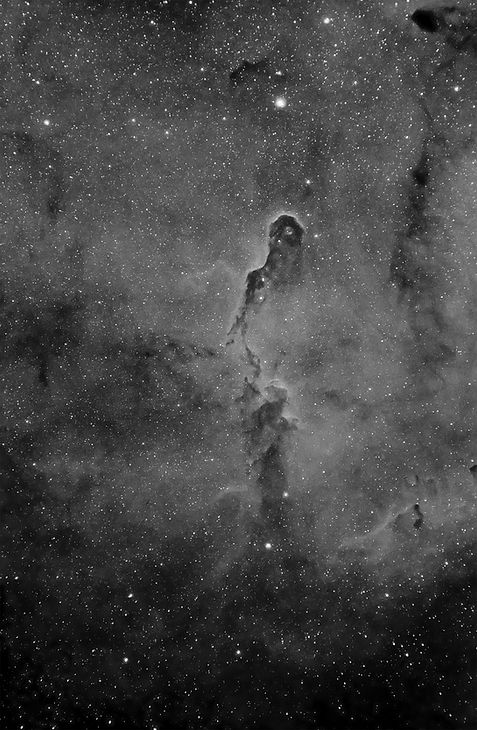
Object: The Elephant Trunk Nebula (M27)
Photographer: Chanan Greenberg, GreenhawkObservatory.com
Scope: 5” Astro-Physics Refractor
Exposure: 160 minutes
Location: Backyard San Jose
Object: The Elephant Trunk Nebula (M27)
Photographer: Chanan Greenberg, GreenhawkObservatory.com
Scope: 5” Astro-Physics Refractor
Exposure: 160 minutes
Location: Backyard San Jose
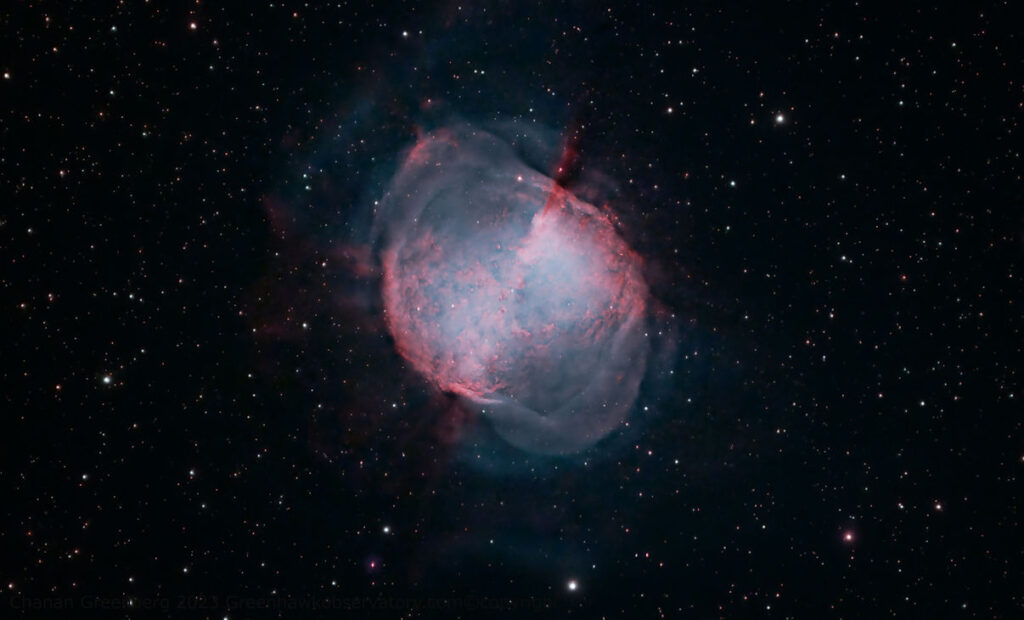
Object: The Dumbbell Nebula (M27)
Photographer: Chanan Greenberg, GreenhawkObservatory.com
Scope: 5” Astro-Physics Refractor
Exposure: 4 Hours and 19 minutes
Location: Backyard San Jose
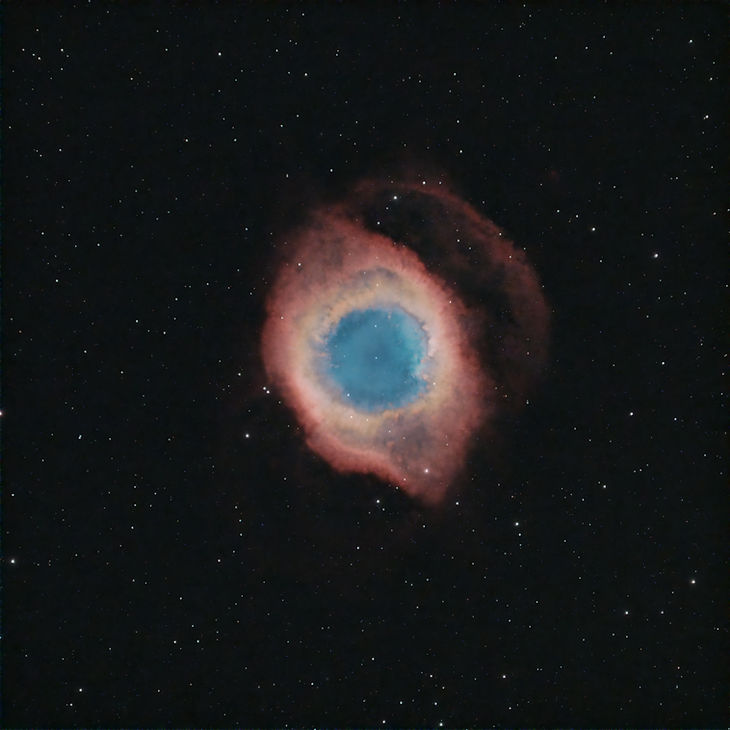
Object: The Helix Nebula (NGC 7293)
Photographer: Chanan Greenberg, GreenhawkObservatory.com
Scope: 5” Astro-Physics Refractor
Exposure: 190 minutes
Location: Backyard San Jose
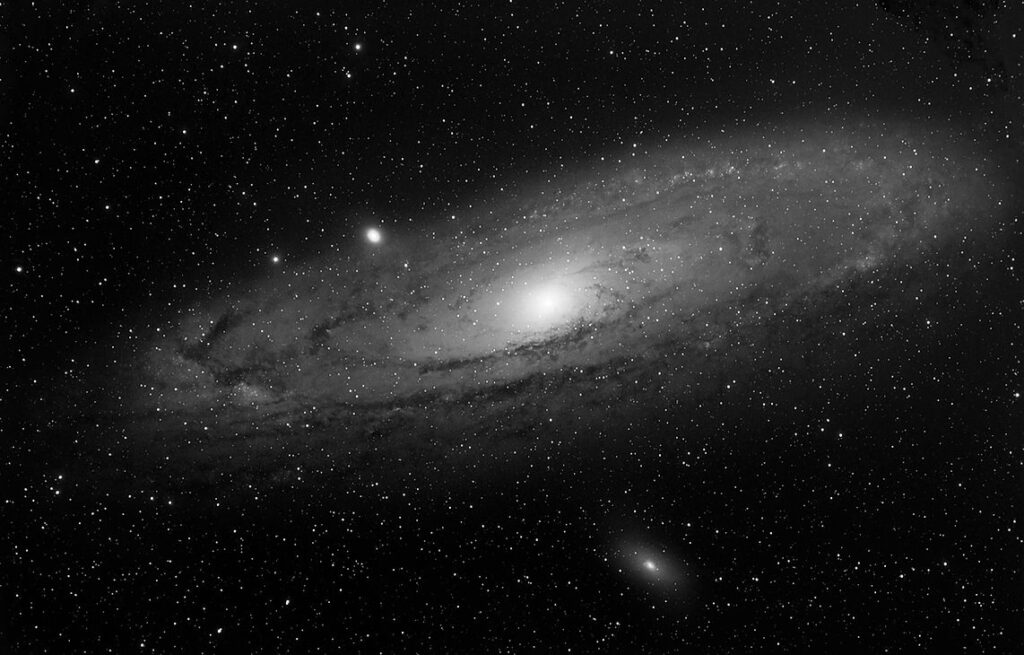
Object: The Andromeda Galaxy (M31)
Photographer: Chanan Greenberg, GreenhawkObservatory.com
Scope: 5” Astro-Physics Refractor
Exposure: 21 Hours
Location: Backyard San Jose
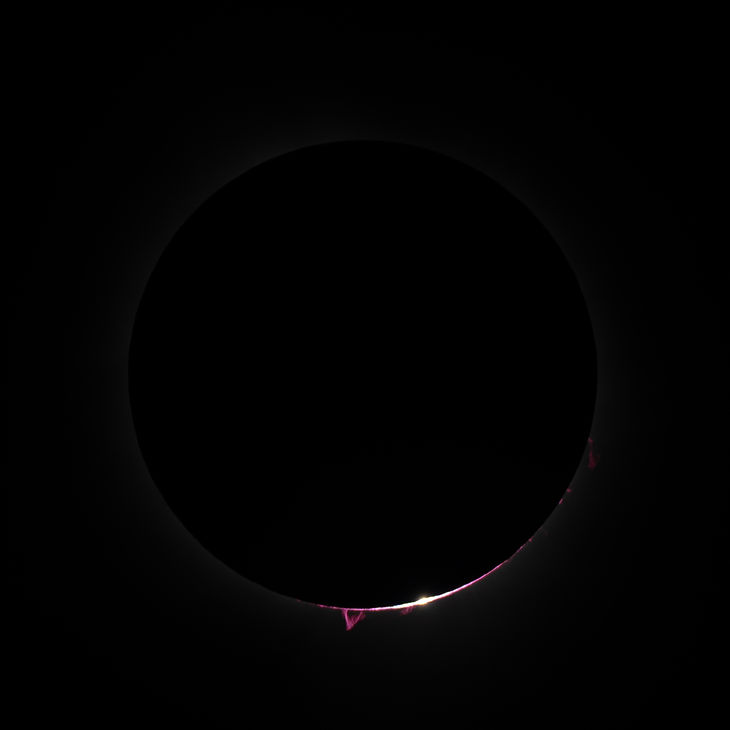
Object: End of Totality 2024
Photographer: Chanan Greenberg, GreenhawkObservatory.com
Nikon Z7ii with 600mm Lens
Location: Morgan Vermont
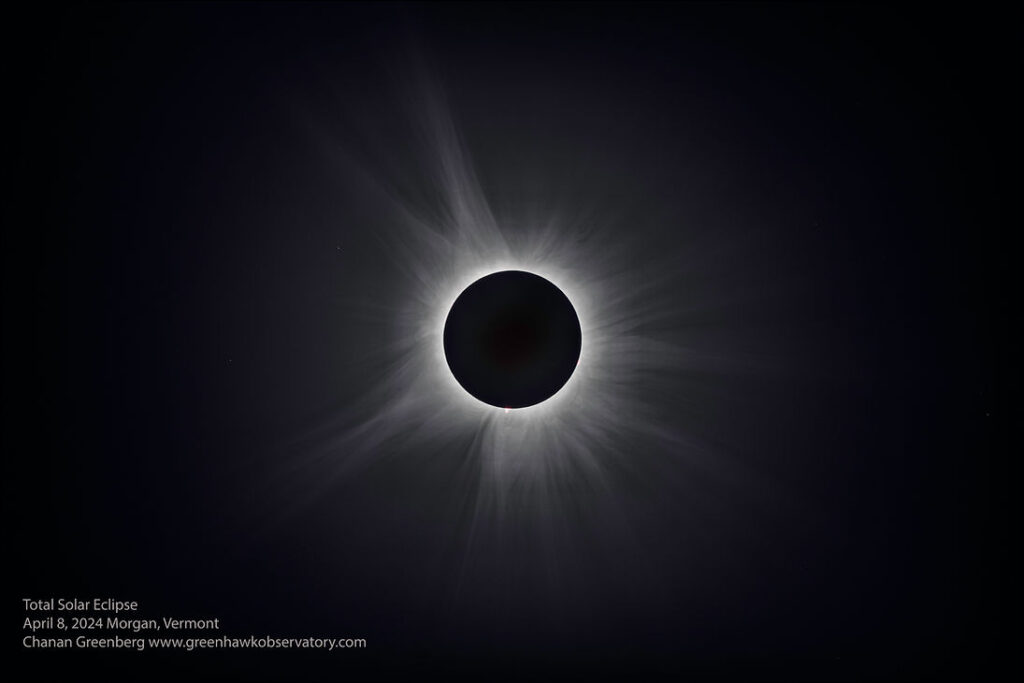
Object: Total Solar Eclipse 2024
Photographer: Chanan Greenberg, GreenhawkObservatory.com
Nikon Z7ii with 600mm Lens
Location: Morgan Vermont
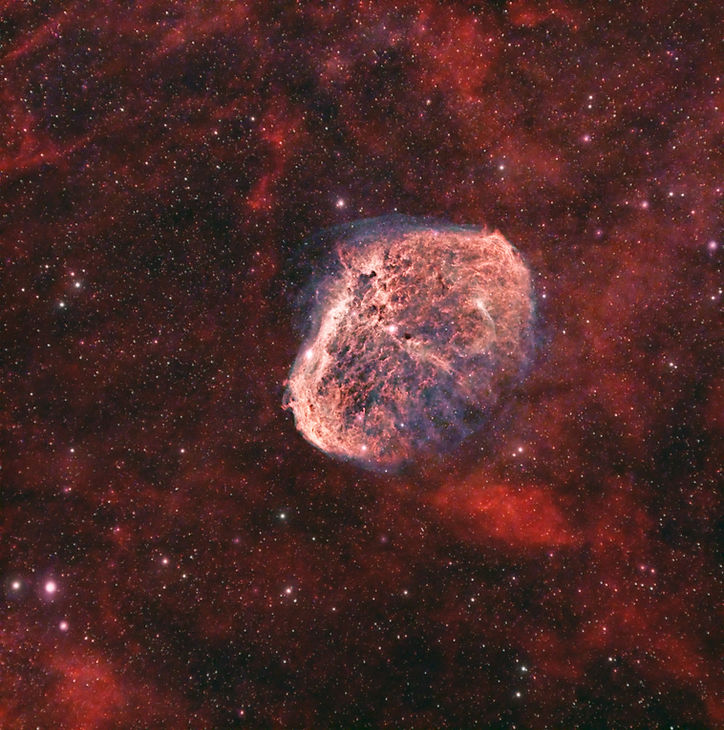
Object: The Crescent Nebula (NGC 6888)
Photographer: Chanan Greenberg, GreenhawkObservatory.com
Scope: 5” Astro-Physics Refractor
Exposure: 114 minutes
Location: Backyard San Jose
Greetings to the Society,
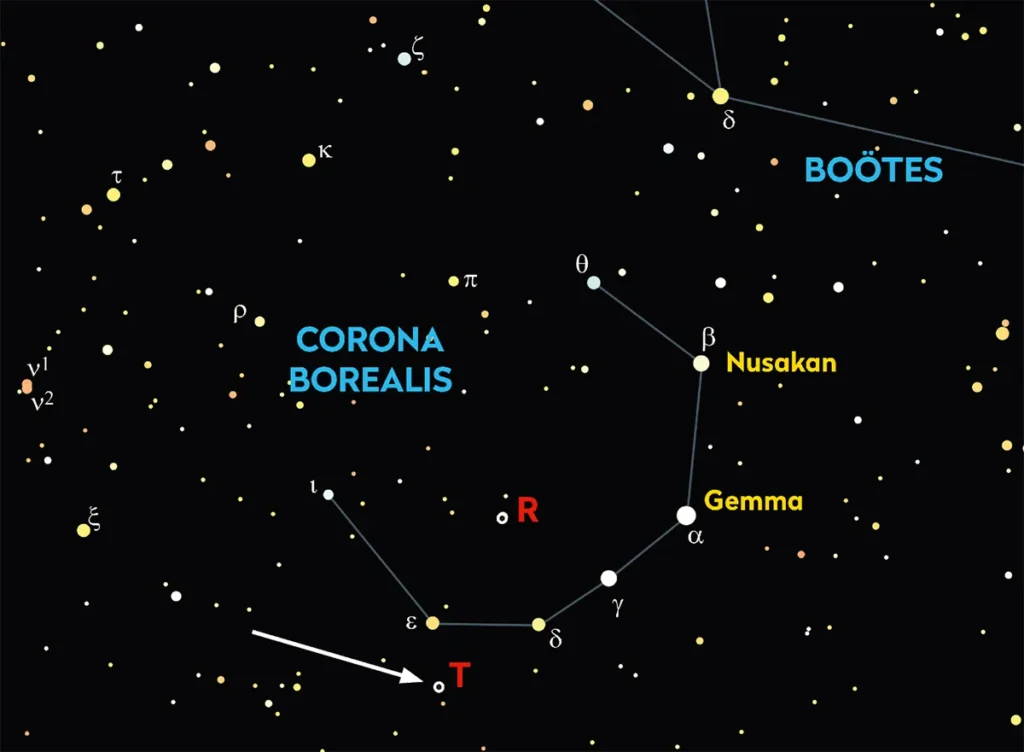
A rare astronomical phenomenon is on the verge of unfolding—the nova nova T Coronae Borealis, which erupts approximately every 80 years, appears to be running behind schedule. When it does, it is predicted to be the brightest nova seen from Earth since 1975, and we are expecting this awe-inspiring event to occur any day now.
In addition to this, mark your calendars for October 12, when Comet C/2023 A3 makes its closest approach to Earth. This comet has the potential to be visible to the naked eye throughout October, appearing low in the western sky just after sunset in the constellation Virgo.
Looking up on the night of October 17, you’ll also see a supermoon—14% larger and much brighter than a regular full moon as it reaches its closest point to Earth. It will be an excellent night for moon gazing!
Later in the season, on November 28, Comet 333P/LINEAR will be visible. While not expected to be as bright as Comet C/2023 A3, it will still be worth observing through a telescope.
Upcoming Space Missions:
The European Space Agency (ESA) will launch its Hera mission on October 7, 2024, to study the Didymos and Dimorphos asteroids. This mission will examine the aftermath of NASA’s Double Asteroid Redirection Test (DART) and contribute to planetary defense research.
Just a few days later, on October 10, NASA’s Europa Clippermission will lift off aboard a SpaceX Falcon Heavy rocket. This ambitious mission aims to study Jupiter’s icy moon Europa, investigating whether its hidden ocean could support life. The spacecraft is set to arrive in 2030 and will perform nearly 50 flybys, mapping much of Europa’s surface.
Meteor Showers and Society Updates:
November brings a series of meteor showers, though viewing conditions this year will be less than ideal. Your best chance might be the Southern Taurids on November 4-5, but you’ll want to find a dark sky for optimal visibility. The Orionids will peak on October 20-21, but a bright waning gibbous moon may interfere with viewing. The Leonids will peak on the night of November 17–18, though a full moon will likely diminish the display.
We also have exciting talks scheduled at our upcoming meetings:
We hope to see you at these events!
Looking Forward to Clear Skies
As we move into fall, we’re hopeful for clear skies to enhance the many astronomical events ahead. It’s going to be an exciting season for our society and the broader community of stargazers.
Here’s to a season full of celestial wonders and clear skies for happy viewing!
Here is to Clear skies and happy viewing!,

Michael Cooke
President, San Mateo County Astronomical Society
Did you see the video of, what’s being dubbed as, the “Comet of the Century” over the Golden Gate bridge? I was pleasantly surprised to see the video but disappointed that I had no idea about it and figured, there might be others who haven’t heard about it either.
The comet is called C/2023 A3 or Tsuchinshan–ATLAS. Although the comet was just discovered last year, according to Earth.com, “scientists have determined that it visited our planet around 80,000 years ago.”1
If you haven’t guessed by the spectacular video, now is the time to see it before dawn. However, it will return very close to our planet again and will be visible after sunset this time. It appears that websites don’t agree on which is the best return date since I’ve seen a range between October 11 and October 13 but it appears that for those of us in North America, it’ll be best to see it beginning October 12.
The only thing is that the moon will be in its waxing gibbous phase with October’s full moon on October 17. None of the website mentioned that the moon could be an issue. Still, Wired.com did mention that “As October progresses, the comet will elevate its position in relation to the horizon and at the same time lose brightness.”2
Happy comet hunting!
Footnotes
Speaker: Prof. Darryl Stanford, Astronomy Professor
College of San Mateo
Plus Fulldome Showing of the movie:
Unveiling the Invisible Universe
Free and open to the public. Free Parking in nearby lots.
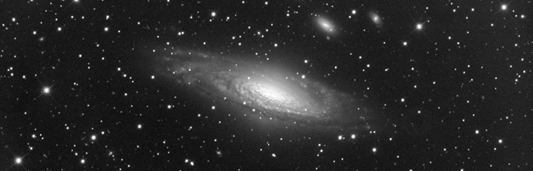
Tonight SMCAS will be treated to a special Fall Planetarium show ‘ ‘The Sky Tonight’ by Astronomy Professor Darryl Stanford. This will be followed by the first showing at CSM of the fulldome movie ‘Unveiling the Invisible Universe‘:
For thousands of years humans observed the light coming from the night sky with their eyes. In the beginning of the 17th century, the invention of the telescope by Galileo revolutionized our knowledge of the Universe. Finally, in the 20th century with the advent of rockets, it became possible to go above the earth’s atmosphere and observe X-ray and gamma ray radiation which are the marks of the hot and violent Universe. But it is not only light that can give us information about the cosmos. Neutrinos and cosmic rays also provide vital information. Finally, the detection by the LIGO experiment of gravitational waves from two merging black holes opened a new window in astrophysics. This video presents images of the cosmos as revealed by all these different messengers.
We propose a mission concept for a space observatory with a large-aperture (50-meter) unsegmented primary mirror suitable for a variety of astronomical applications. The mirror would be created in space via a novel approach based on fluidic shaping in microgravity, which has already been successfully demonstrated in a laboratory neutral buoyancy environment, in parabolic microgravity flights, and aboard the International Space Station (ISS). Theoretically scale-invariant, this technique has produced optical components with superb, sub-nanometer (RMS) surface quality.
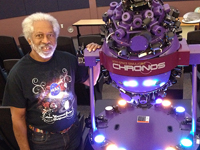
Darryl has been Astronomy Professor at the College of San Mateo since 1996. He received his B.S., Physics, at the Polytechnic Institute of New York; an M.S., in Solid State Physics at Concordia University, Montreal, Canada; and an M.S, in Astrophysics at the University of Toledo.
His other interests include riding his Harley, playing with his dogs, amateur astronomy, learning new languages, and playing his conga!